
Greetings 2019. It’s been a while since I have last checked in with the blog. Since Strasbourg way back in 2018. Well it’s a new year and it’s time to dust off the passport that has been sitting in our safe taunting me since the long hours of busy season have begun. In these weeks since my last blog we have wrapped on our breakout tv roles (airing date tbd-more details at another time), traveling back to the States for the holidays, rang in 2019 in Amsterdam (pure insanity to number of fireworks) and crawled into our busy season holes January and the better part of February. Busy season was still terrible – despite the hopes for better work life balance moving abroad – but the thought of the non-busy times ahead filled with travel and fun kept a light at the end of the tunnel. And while I am still very much in the tunnel (compliments of another busy season client added to my portfolio) this weekend we got to do something very, very cool. Last year my dad and Bill’s dad planned an adventure. 10 days traveling through Egypt and Jordan seeing all the sites – pyramids, Petra, the works. When I saw their itinerary I noticed the first few days they were in Cairo fell on a weekend, after my main client’s filing. So I asked – can we meet you for the weekend and see the pyramids? And that’s the story of how we ended up in Cairo for 36 hours.
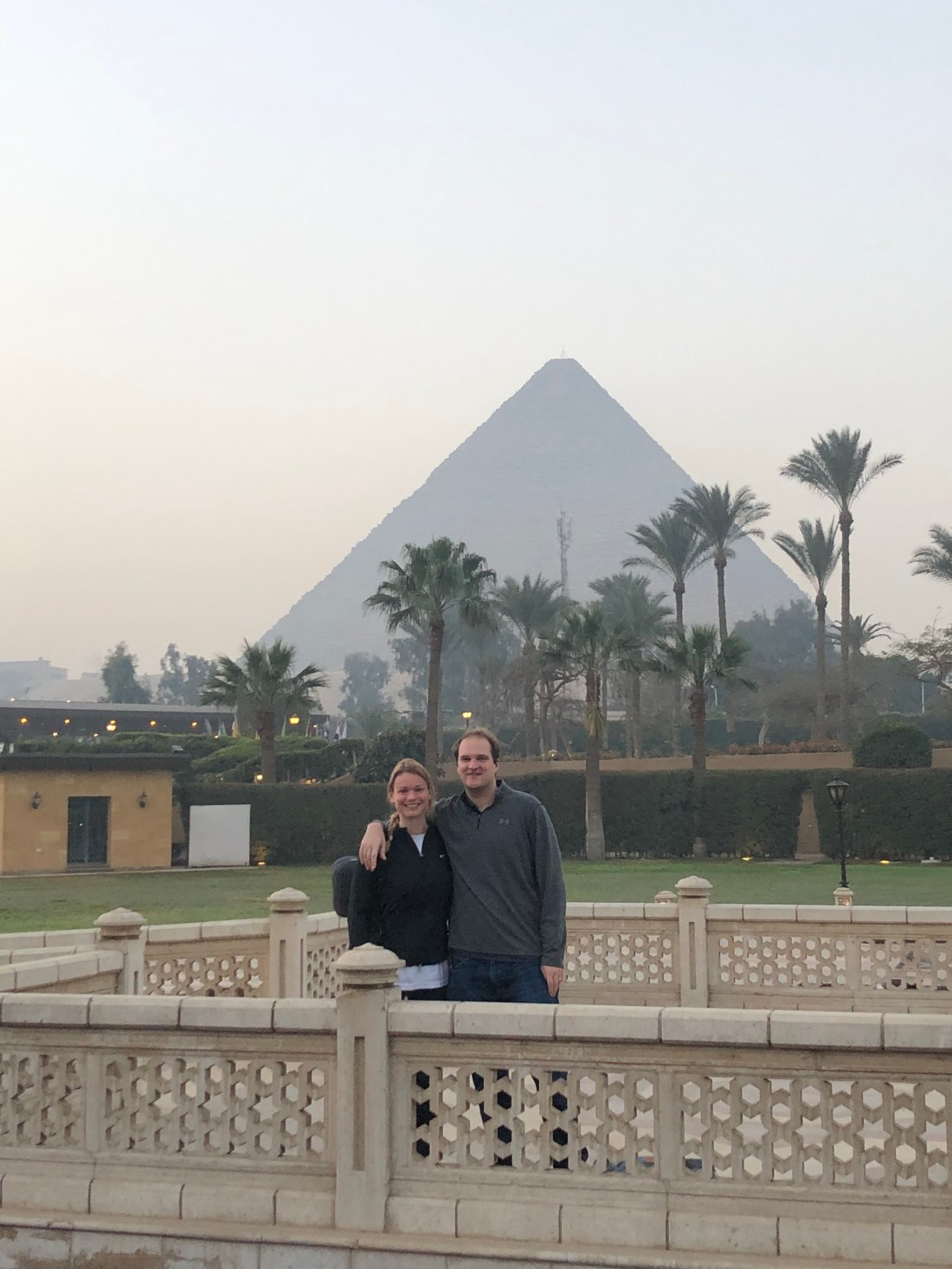
There is one direct flight to Cairo a day leaving at 3 pm. The flight is about 4.5 hours from Amsterdam and if you don’t go direct it added a minimum of 2 hours or so to the itinerary. Not ideal for a 36 hour venture to Egypt. So obviously we had to go direct. Practicing being Dutch and putting ourselves first sometimes. Anyway the flight itself was very easy. EgyptAir wasn’t anything to write home about but clean, comfortable, no complaints. When we arrived at the Cairo airport we were greeted by what I can only describe as an airport chauffeur. He met us before immigration (with a bouquet of flowers for me – nice touch), gave us our visas and swiftly took us to the car. We were in and out in about 10 minutes. Not too shabby. If you have Egypt on your list I would definitely look into having someone do this for you. Travel administrative headaches like visas can be so complicated to figure out and a mess if you get wrong. When we stepped outside the air was hazy and smelled of smoke. Some sort of combination of sand particles in the air and pollution I assume. Once in the car we got our first taste of driving around Cairo. Let’s just say that in Cairo there are no real rules of the road. Everyone is driving wherever they want – regardless of street lines or signs – people are crossing the middle of busy highways, cars pull off to the side and randomly stop blocking a lane. Pure chaos. The weird thing was within the absolute chaos and hooking none of it was aggressive. It was like organized chaos everyone understood and accepted. After about an hour or so in traffic we arrived at the Marriott Mena House right at the base of the pyramids. I was very confused when we first arrived because the pyramids are not lit up at night – don’t know why I assumed they would be – and it’s so dark in the desert you can’t see them at night, or you can barely see them. When we arrived in the hotel lobby we saw our dads there waiting then it was off to the rooms to catch some sleep before an early start the next day.
We woke up and looked out the window and I could not believe we couldn’t see the pyramids the night before. In the daylight you look out and it’s like WOW there they are. 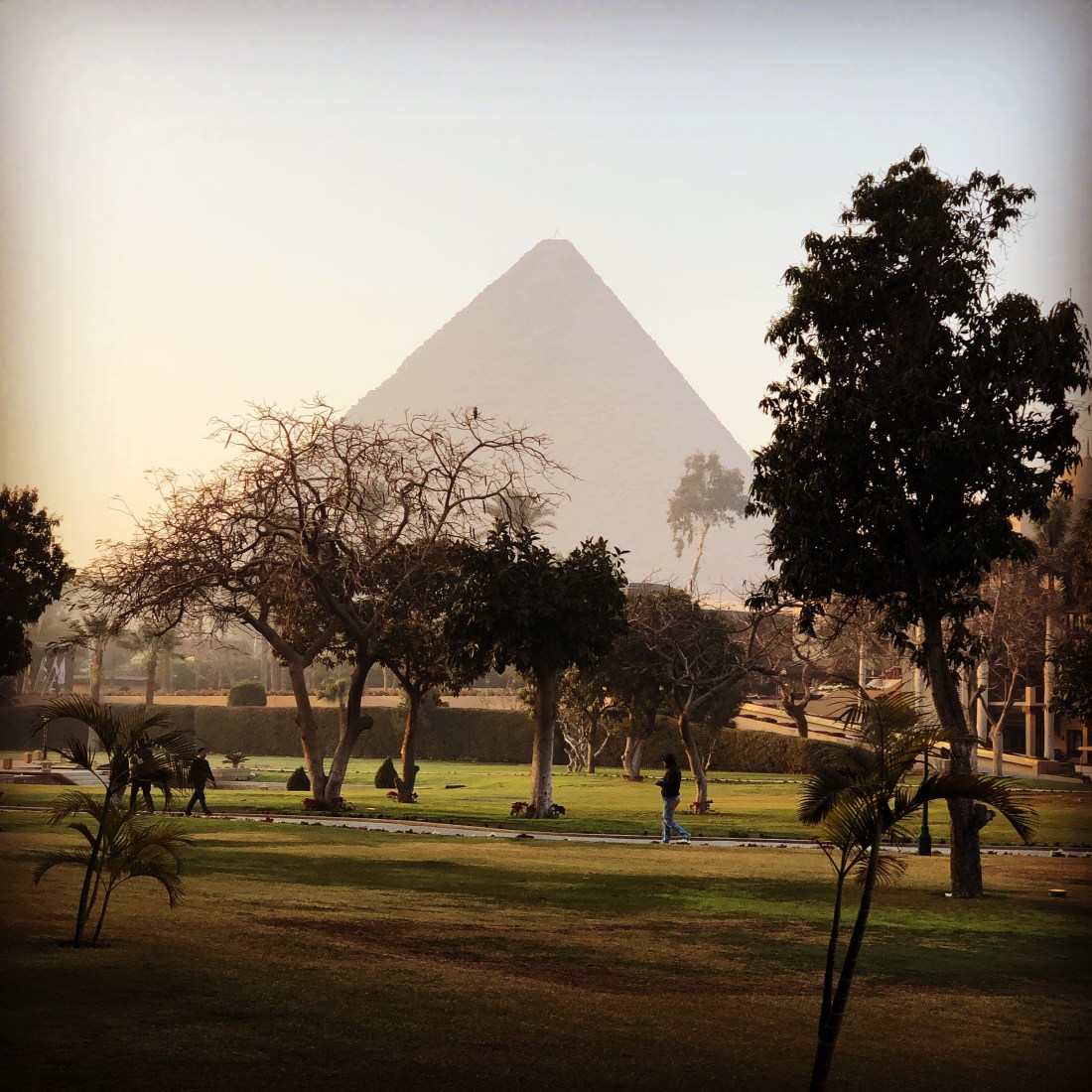
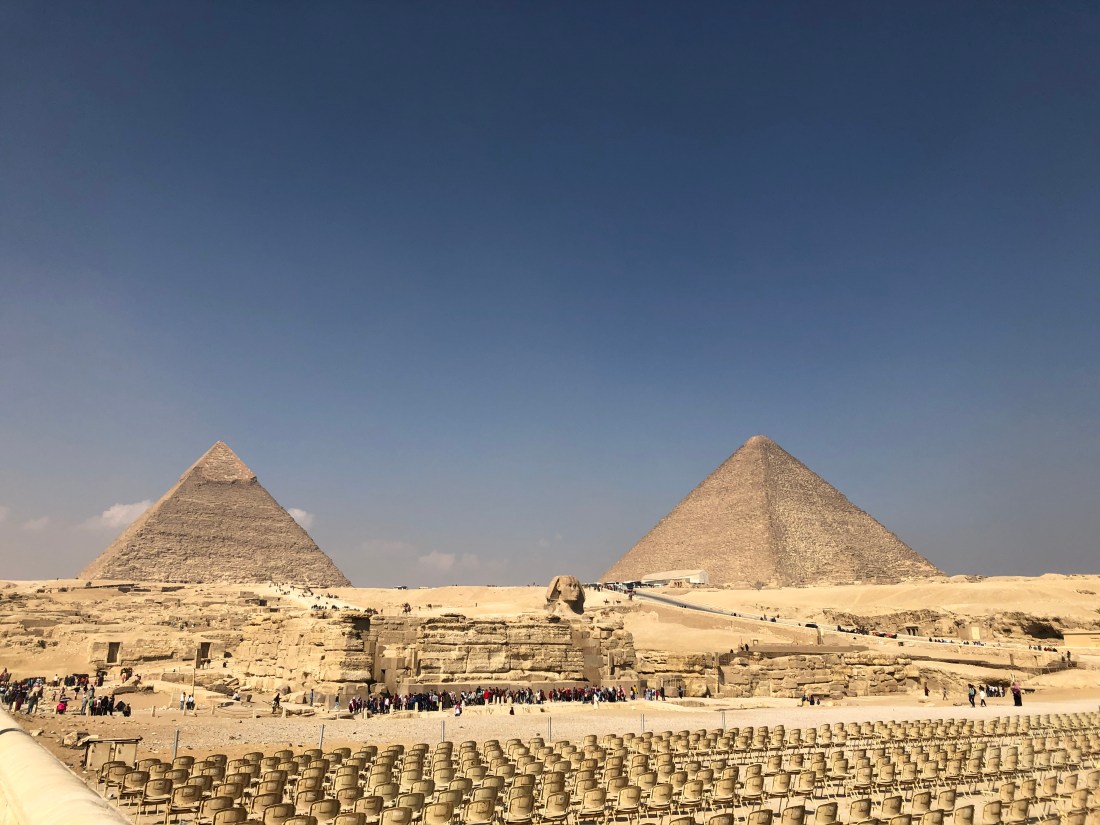
We went over the breakfast in the hotel restaurant which was a combination of options suiting every cultures needs – rice and chicken, cheese and meats, eggs and sausage (non pork of course), and the universal breakfast items – assorted breads and pastries. After fueling up we met our guide Sally in the lobby. She quickly shuttled us off to the base of the great pyramid. The great pyramids of Giza are actually a series of three large pyramids – one for King Khufu, his son, and his grandson – and six smaller pyramids – for the wives and daughters of the pharaohs.
There are a LOT of facts about the pyramids so I could write and write and write but for the sake of your sanity and mine, here are a couple highlights:
- The pyramids were basically really really big tombs with the burial chamber generally under the pyramid itself. In the great pyramid, however, the burial chamber is about 2/3 of the way to the top. Likely to confuse grave robbers (unsuccessfully)
- The largest pyramid was Khufu’s but his son’s pyramid is actually “taller” as it sits at a slightly higher elevation. The third belongs to the grandson and is much much smaller in comparison, perhaps a sign of the decline in economic situation by the time he was pharaoh.
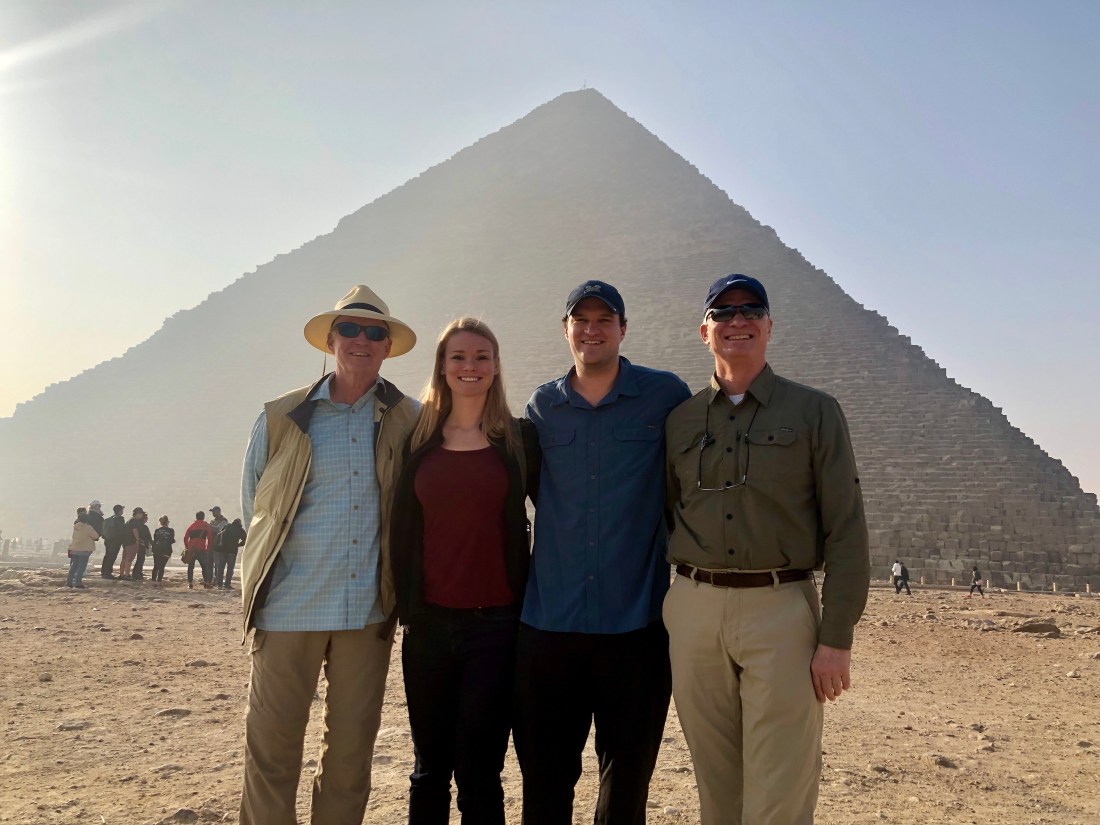
Khufu’s pyramid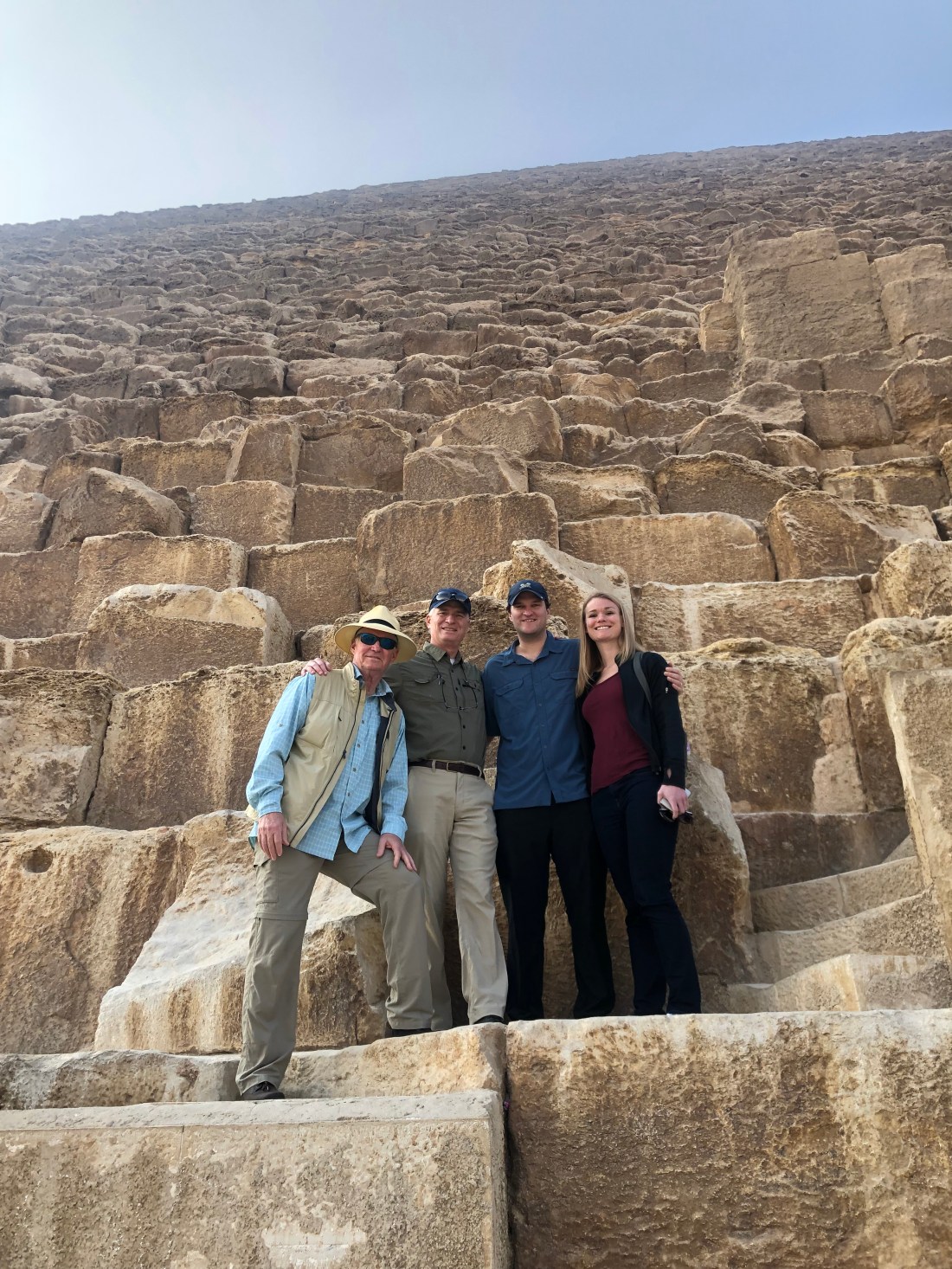 Khufu’s pyramid
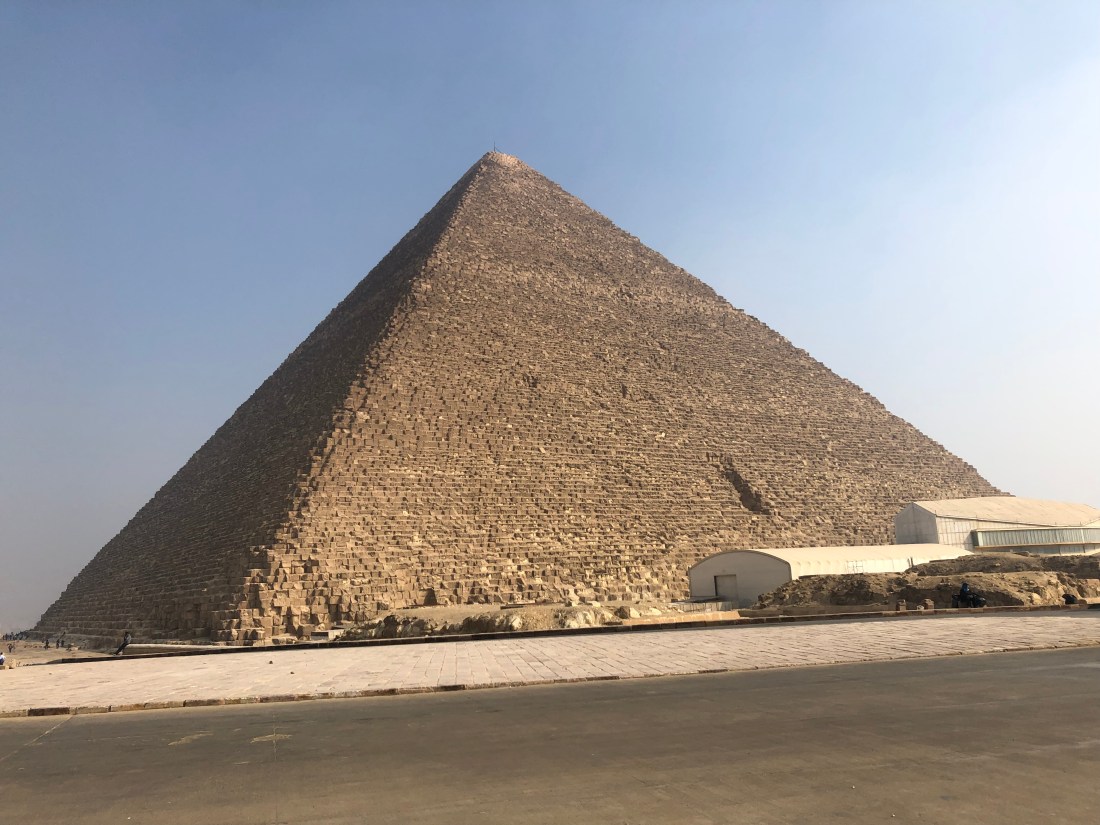
Khufu’s pyramid
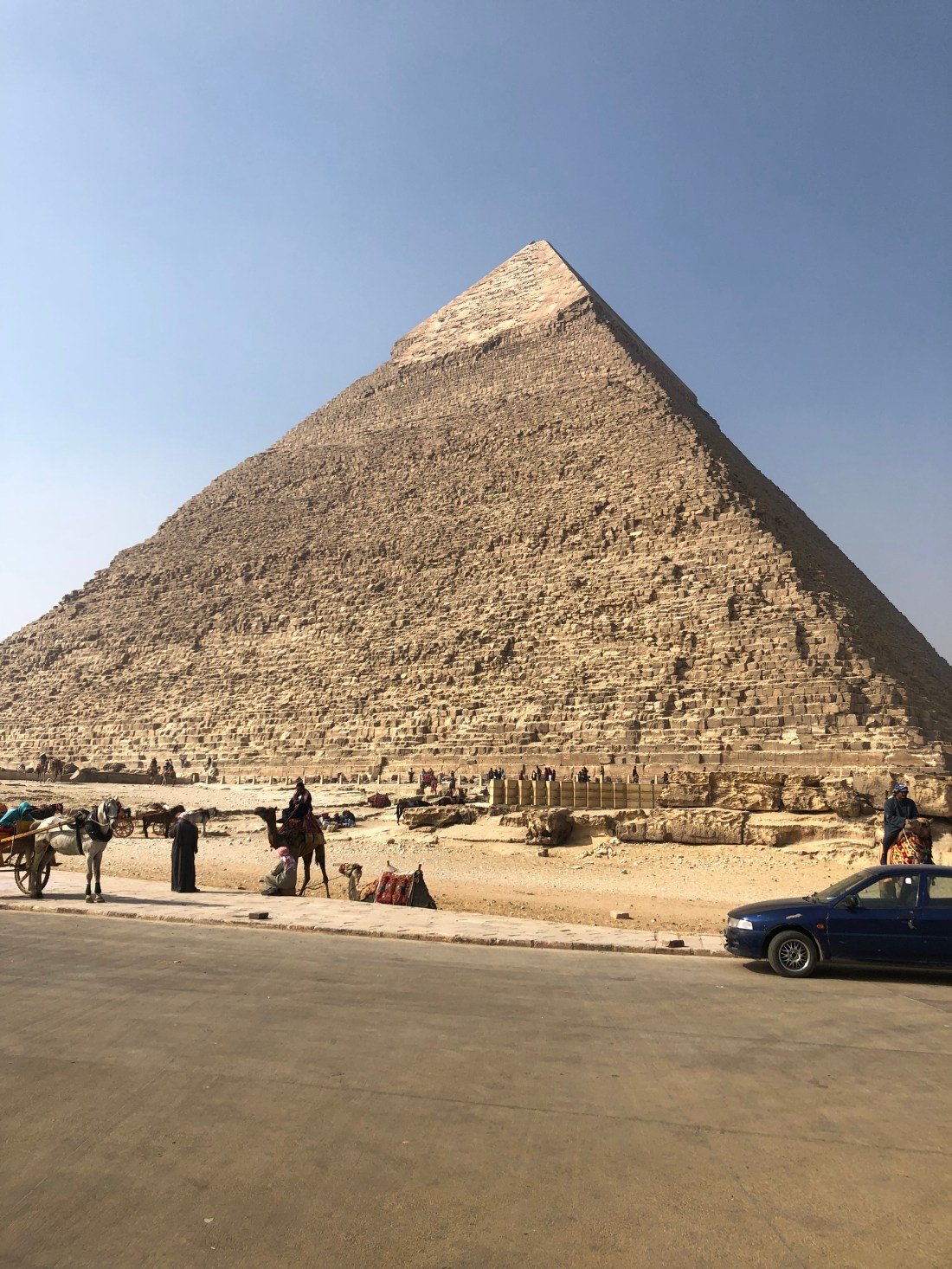
Khufu’s son’s pyramid

Khufu’s son’s pyramid (left) and Khufu’s pyramid (right)
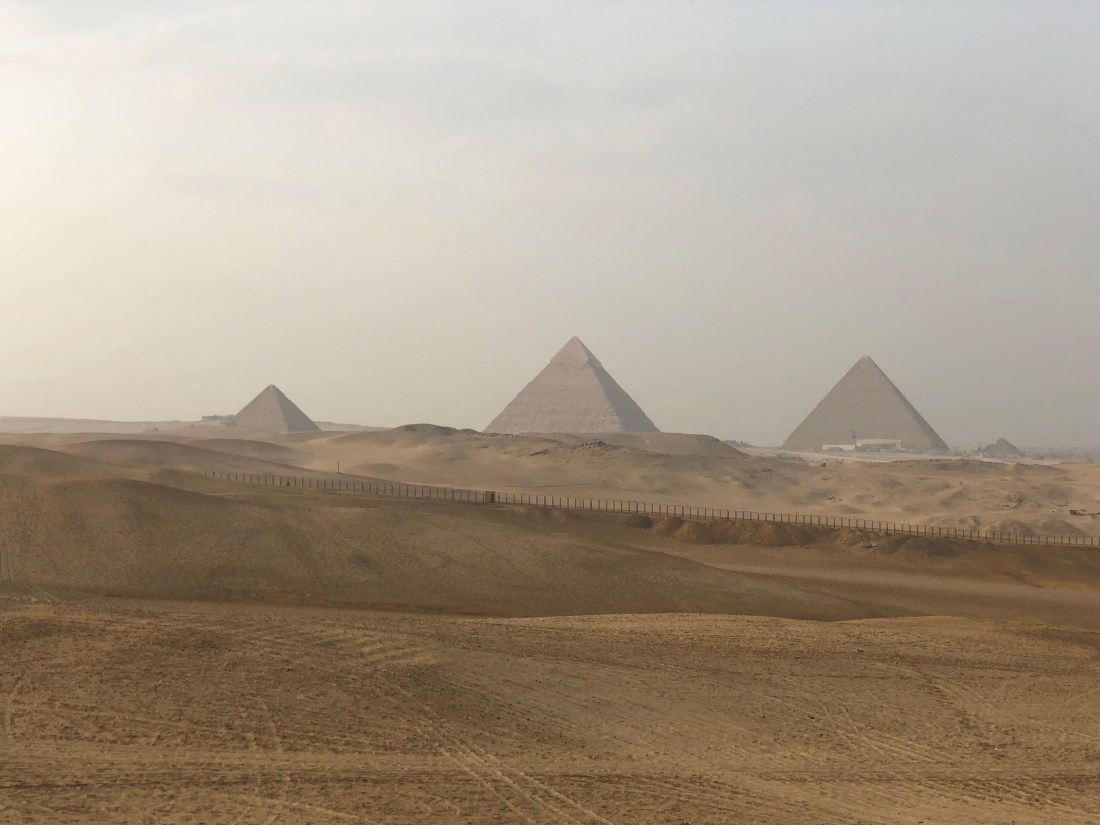
Grandson’s pyramid (left), son’s middle, Khufu’s (right)
- Each pyramid had a shined limestone casing over the structure we see today. The only pyramid with a significant amount of the casing remaining is the pyramid for Khufu’s son.
- There are not really large open spaces inside the pyramids, really just the burial rooms and small, narrow passage ways leading there. You can go inside the two largest pyramids for additional cost. Khufu’s pyramid is more expensive, we went into the son’s and it was ok. Not for the claustrophobic.
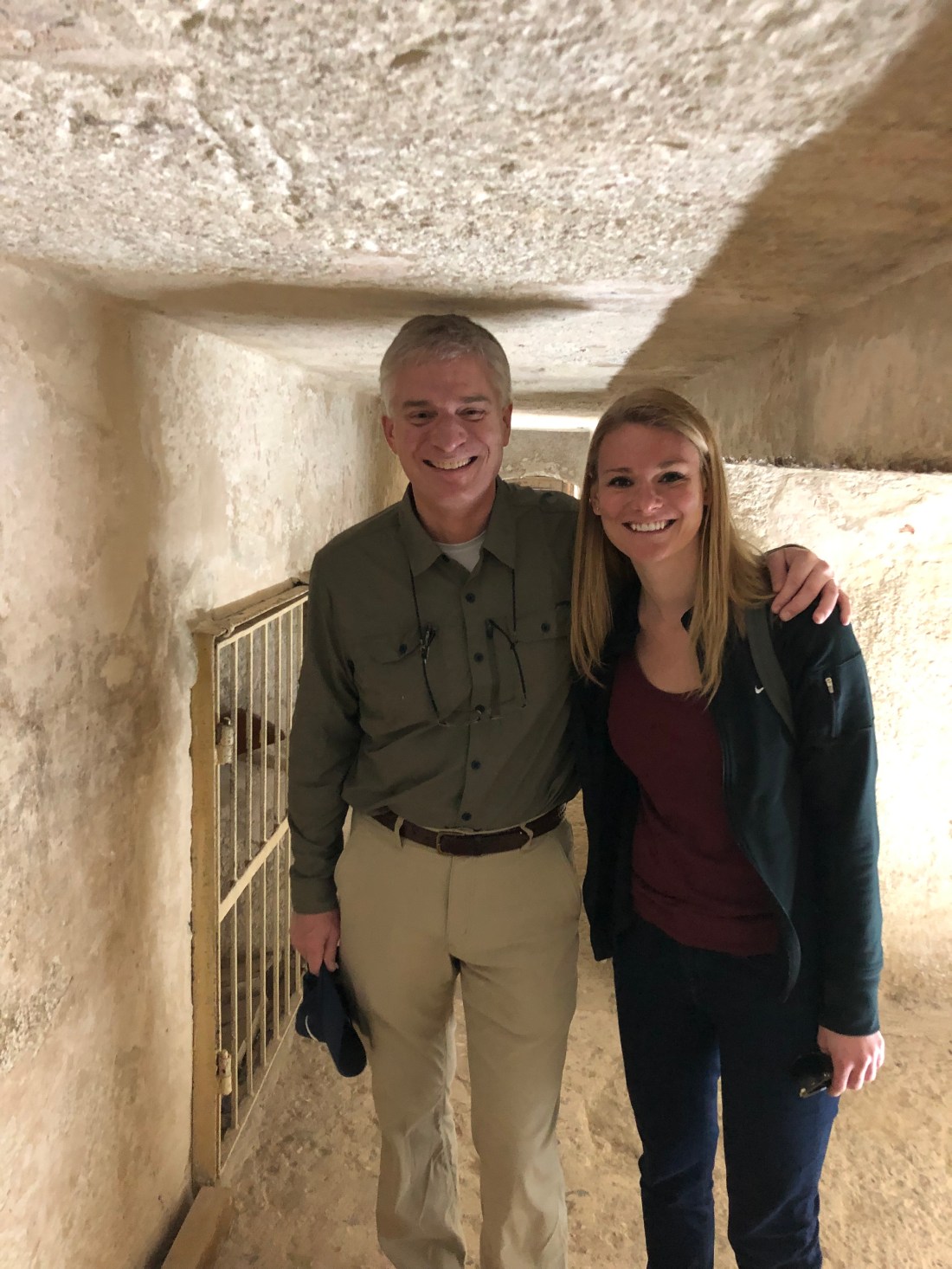
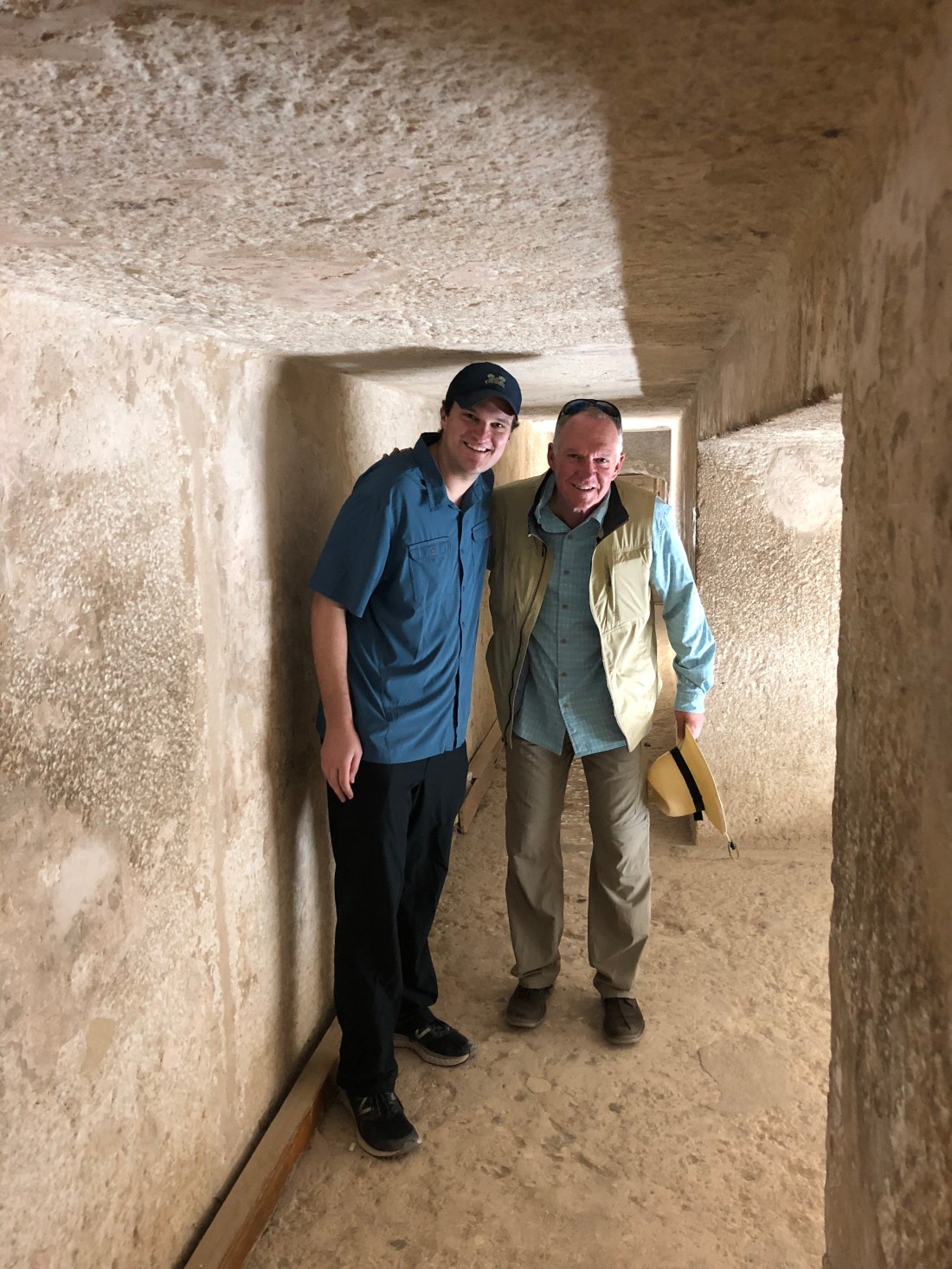
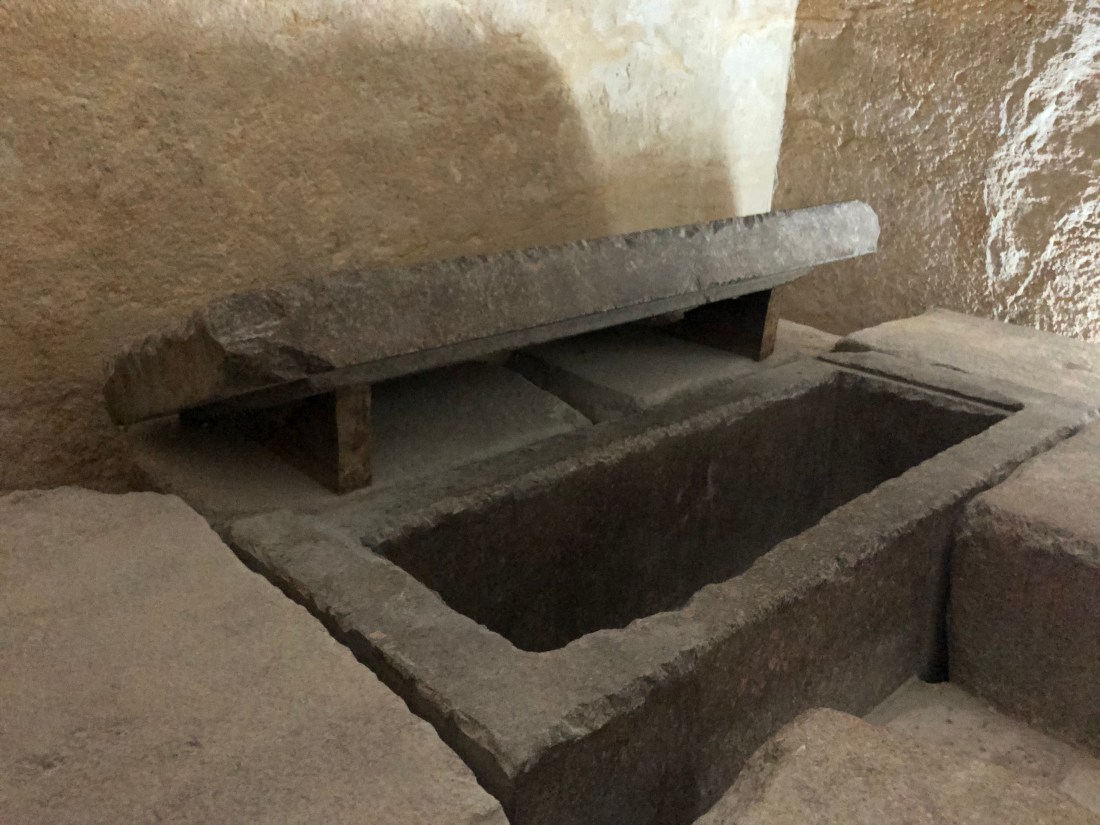
- There is a lot of astrological and mathematical significance to the temple. The facts that stood out to me – 1) Khufu’s pyramid faces directly north, oriented with the North Star. The other two pyramids are aligned with the other two orient stars 2) if you divide the perimeter of the great pyramid by the height you get pi. This is also true for each of the rooms
After visiting the pyramids themselves we went to the east side of the pyramids and saw the mummification temple for Khufu. The temple was covered in sand for years and discovered by the French in the 1800’s. Each pharaoh in addition to their pyramid had a separate temple in which the 70 day mummification process took place. Seems a bit excessive to use for only 70 days. The mummification process is very interesting in the sense that despite us knowing so much about the mummification process it was actually never written down (or so our guide says. Haven’t audited that so can only provide reasonable assurance). This is another topic we could go on and on about but here are a few fun facts:
- All of the organs are taken out of the body for the mummification and kept while with the exception of the brain which is pulled out of the body via the nose
- The organs are all kept outside the body except the heart. The heart is returned to the body to be used in the final judgment. First, you present yourself to a panel of judges who ask you questions about your life and they vote on if they think you’ve lived a good life. If it’s split, they weigh your heart against the feather of truth. If your heart is lighter than the feather, you’re golden.
Next to the mummification temple is the Sphinx, or at least the one we all know from the photos. There are actually hundreds of Sphinx across Egypt but this is the largest. Apparently the Sphinx is carved from one stone that is part of the landscape. It blocks the direct path from the mummification temple to the pyramid so they decided to at least carve it into something. The Sphinx was meant to intimidate those who walked up to it.
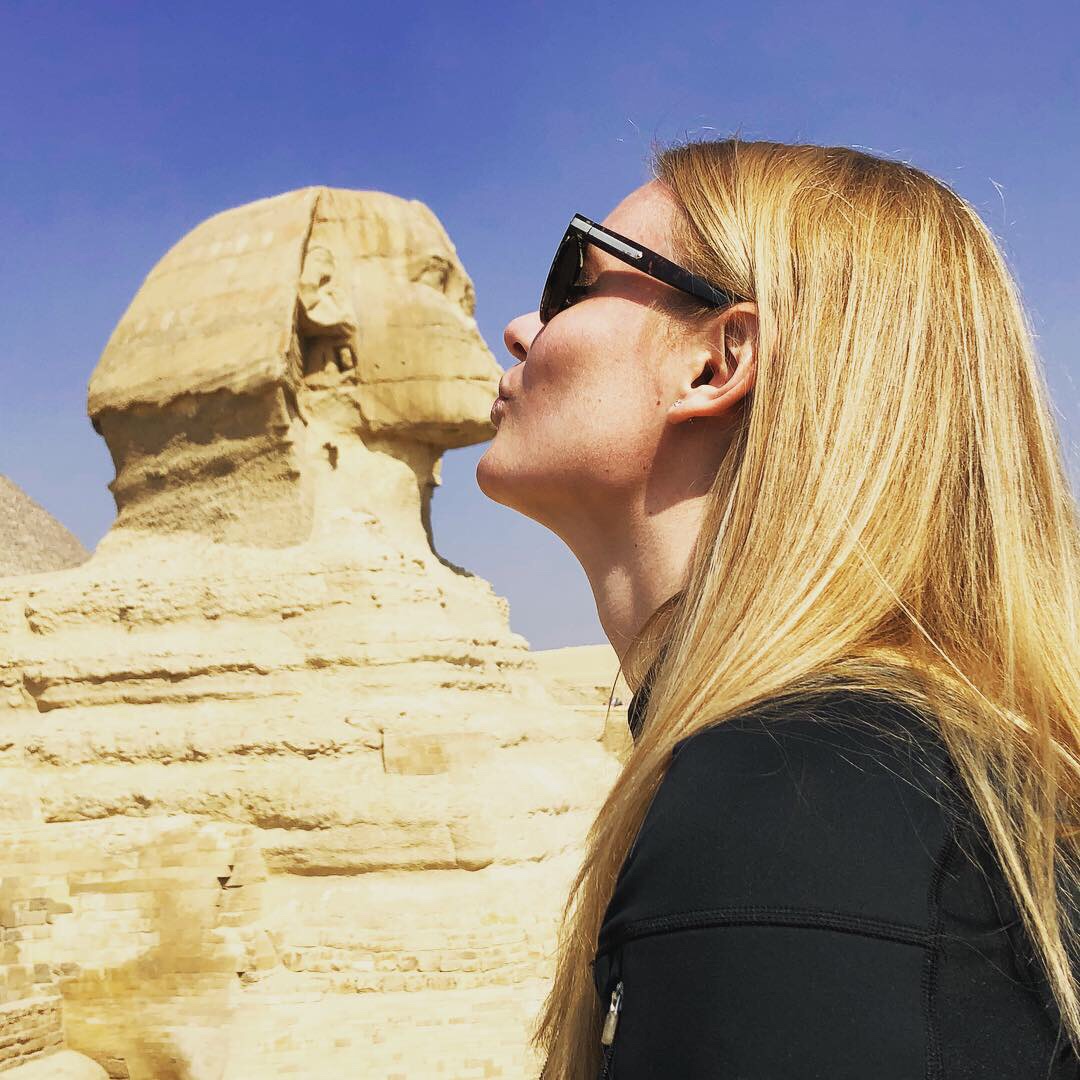
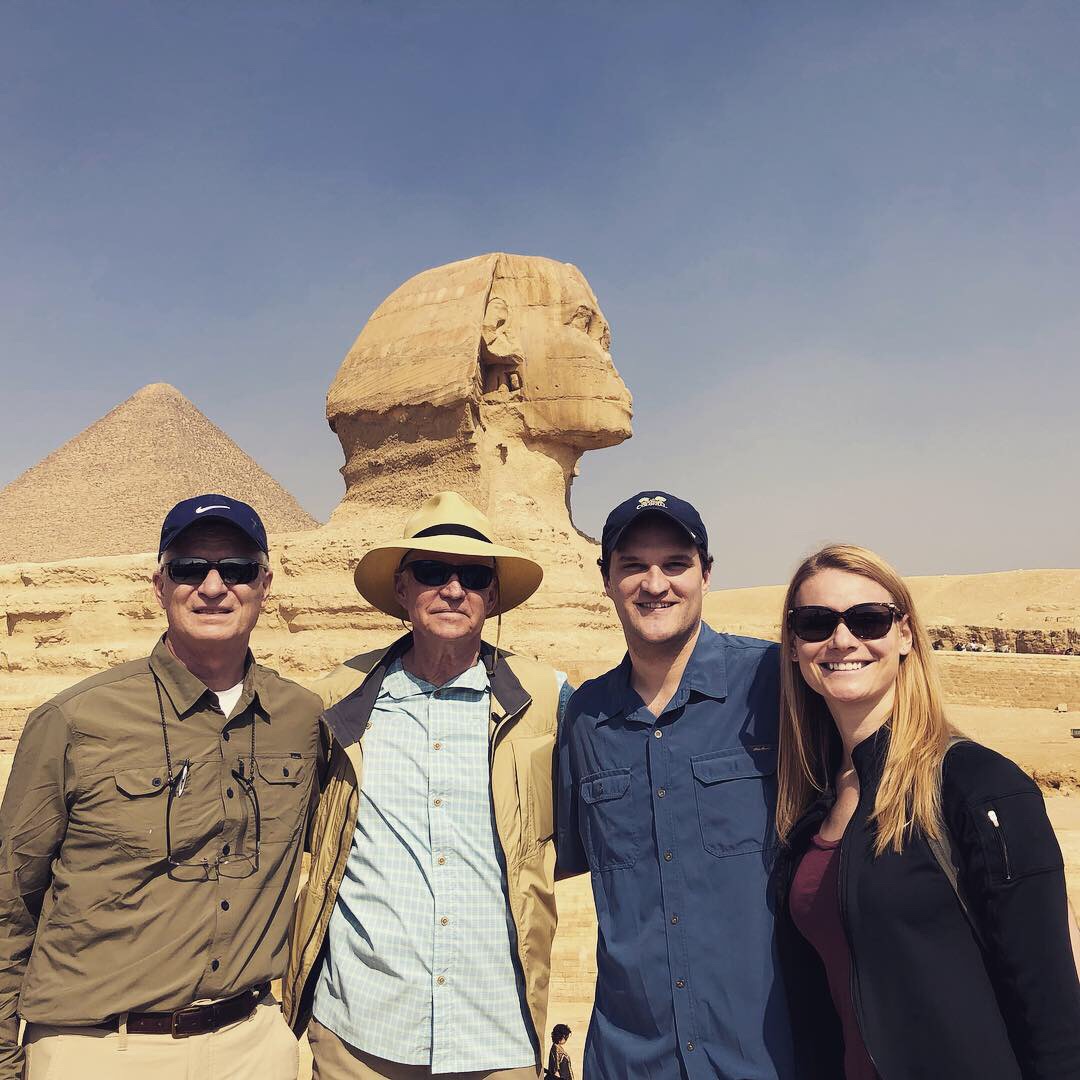
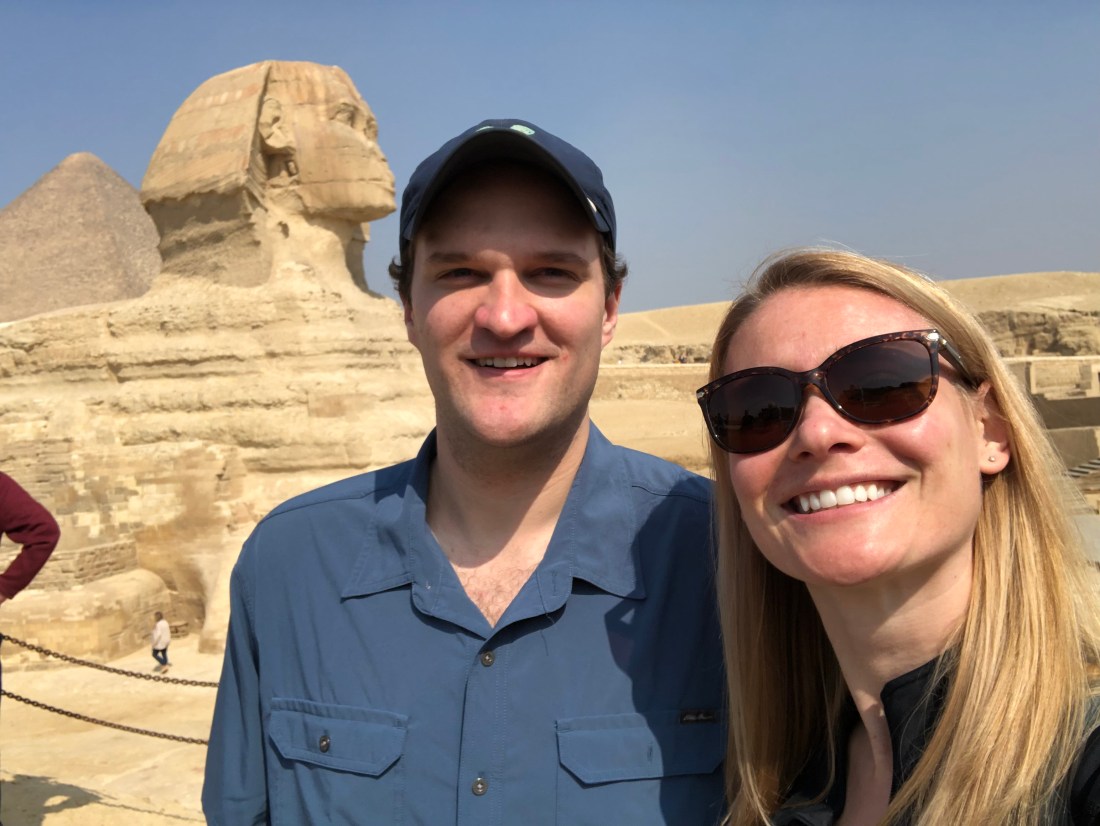
After the pyramids we stopped in a state run store – time for the souvenir sales pitch. The speciality item for sale was called a cartouche. This is an oblong oval with hieroglyphic letters in the center. It is often given when you get married and has your name on one surface and the name of your spouse on the other. It symbolizes a marriage that lasts forever. After sales pitch #1 we headed into sales pitch #2 where we learned about papyrus – used in the oldest form of paper. Essentially how it is made is from the stalk of the papyrus plant cut into strips, pressed to remove the excess water, woven together, and pressed again. The final product felt a little like some sort of currency. They had paintings all over the showroom on the papyrus paper which were all very pretty to look at but we left with just the memory.
Once the shopping was over, it was time to head to Memphis, not the Tennessee Memphis but the oldest capital of Egypt Memphis. Memphis was about a 30-45 minute drive which was very eye opening. The road followed a canal that led to the Nile which was perhaps the most disgusting body of water I have seen. Bags and bags and bags of garbage piled up on the bank of the canal, spilling into the water, various pieces of trash floating along the murky green water. Just witnessing the filth made me thankful for organized trash collection which is clearly something that does not exist in Cairo. There were also several dead large animals either on the side or in the water. At one point, I even saw a half eaten dead horse. Needless to say, the experience made me very thankful to live in a clean city and shocked there are places in this state.
When we arrived in Memphis we went to a smaller open air museum. Most of the items looked a little like rubble to me but there were two impressive Ramses the second statues and a smaller Sphinx.
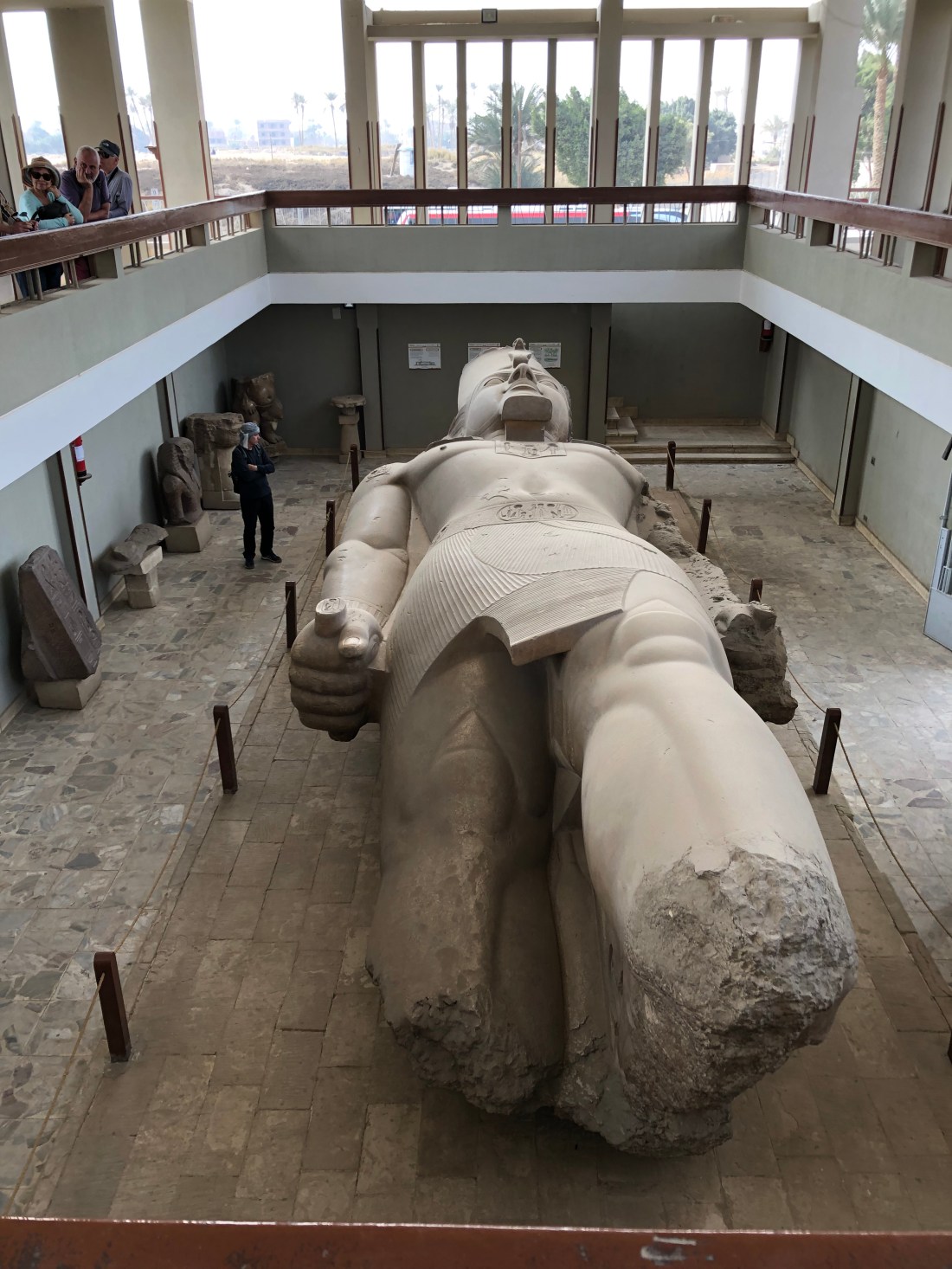
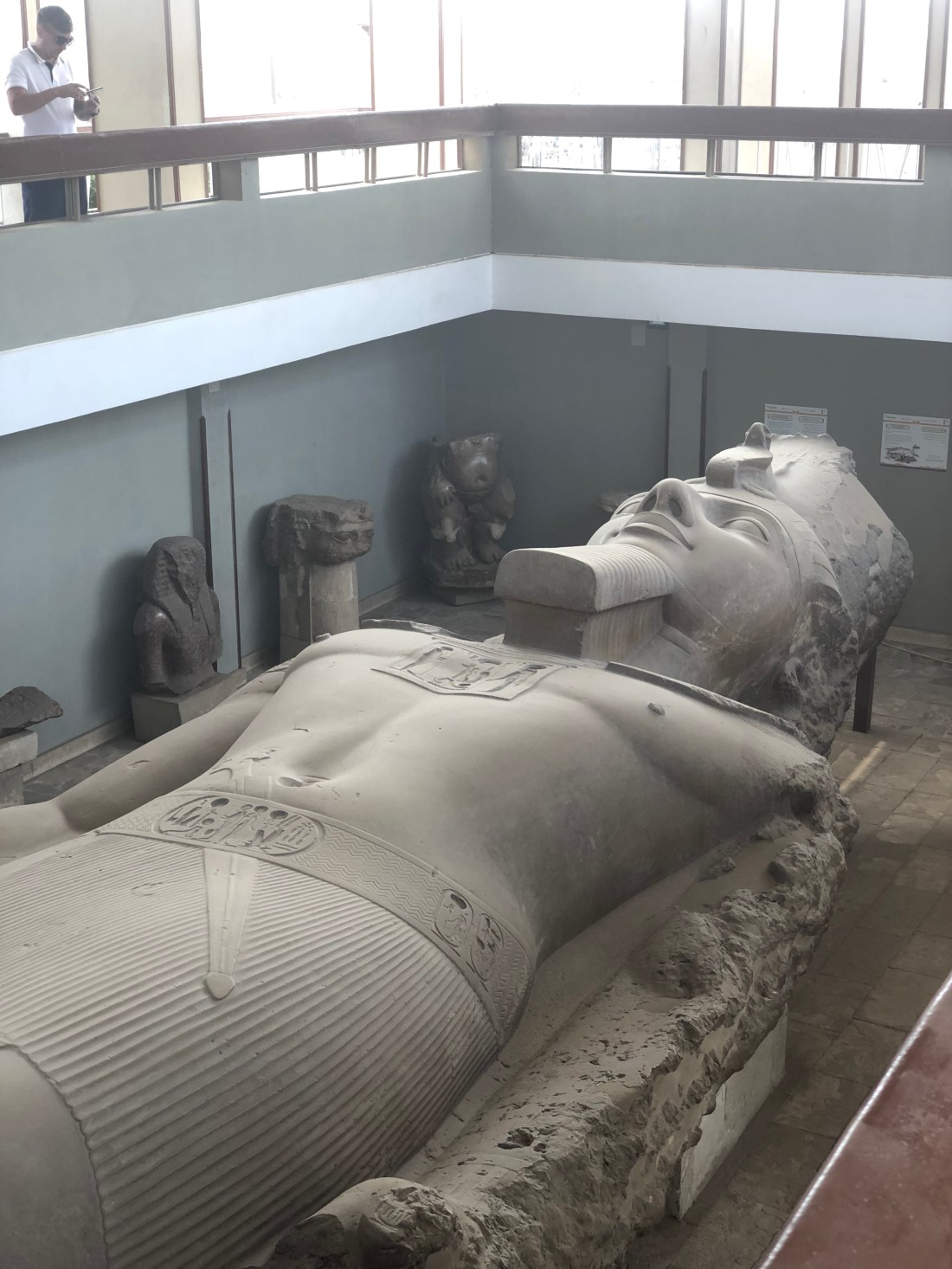
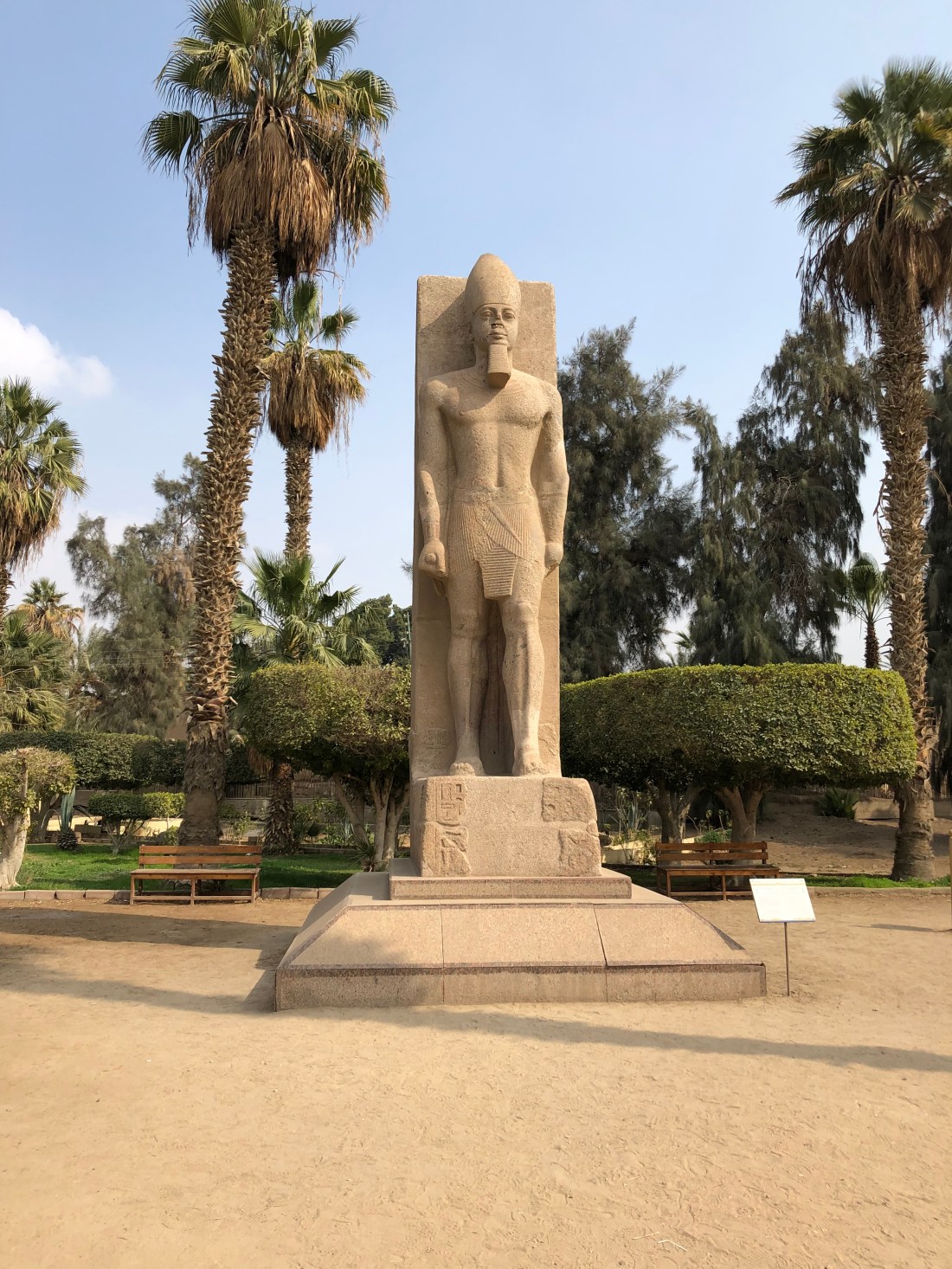
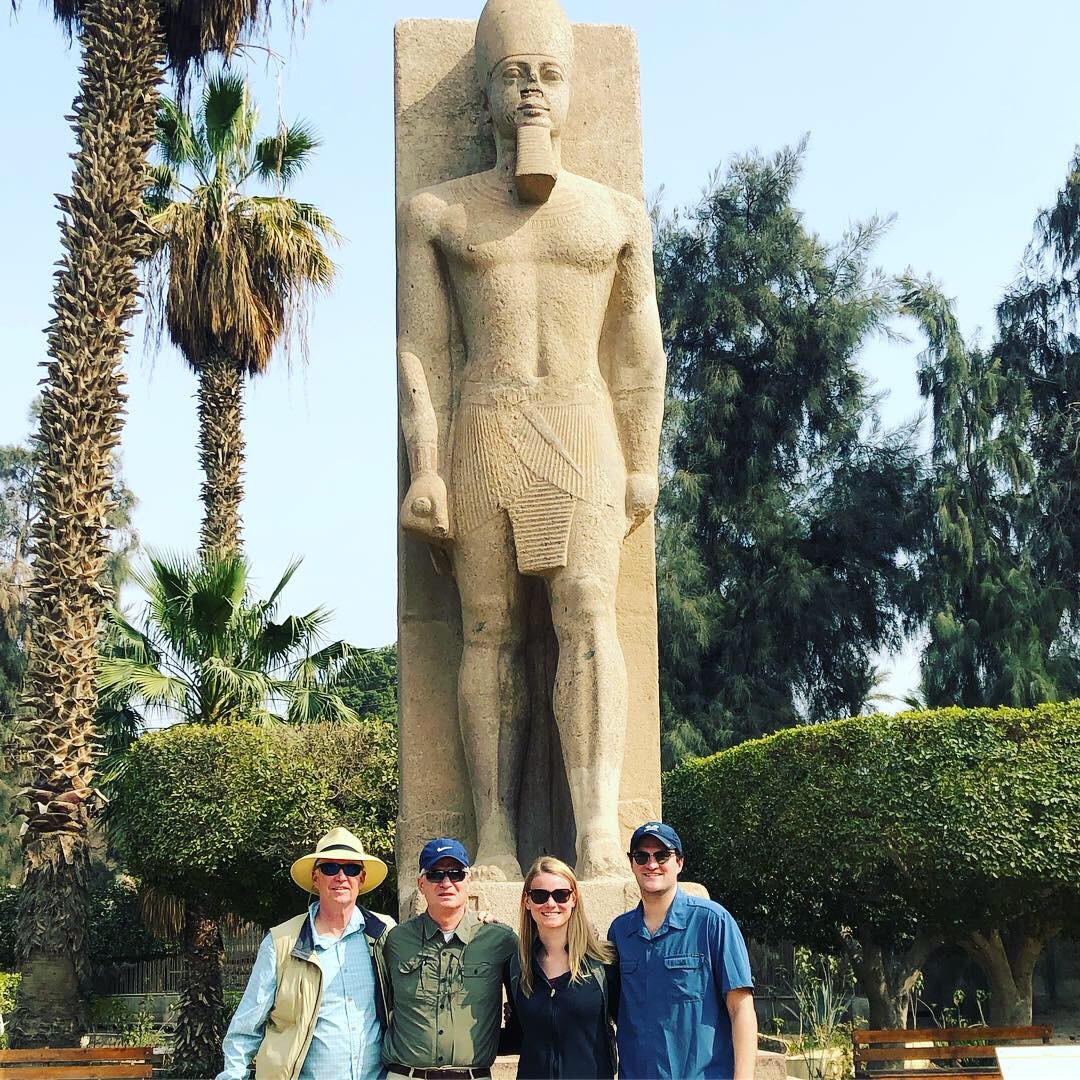
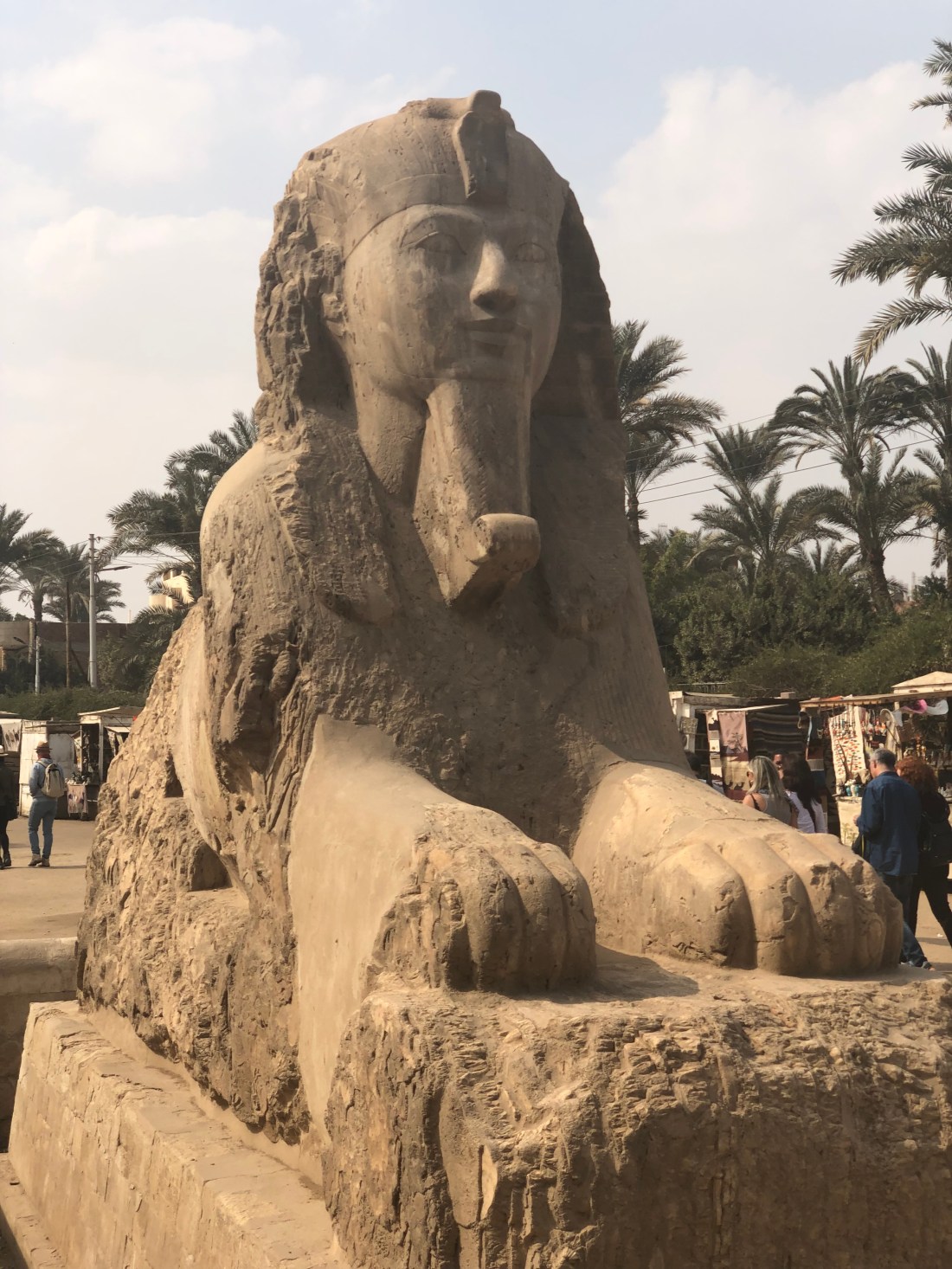
Following Memphis we went to the site of the first pyramid called the step pyramid. You could tell it was really their first go around building a pyramid as it really looked like a tiered cake as opposed to a pyramid.
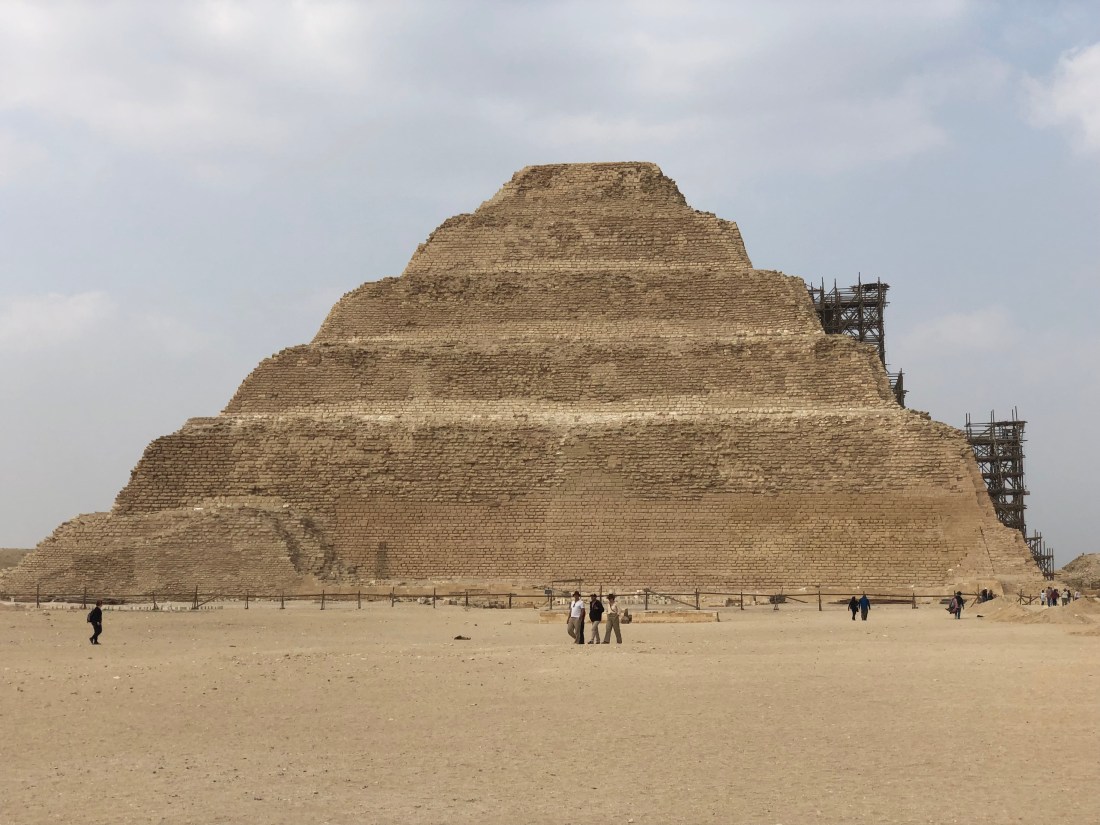

In the distance we saw two other pyramids, the red pyramid and the bent pyramid.
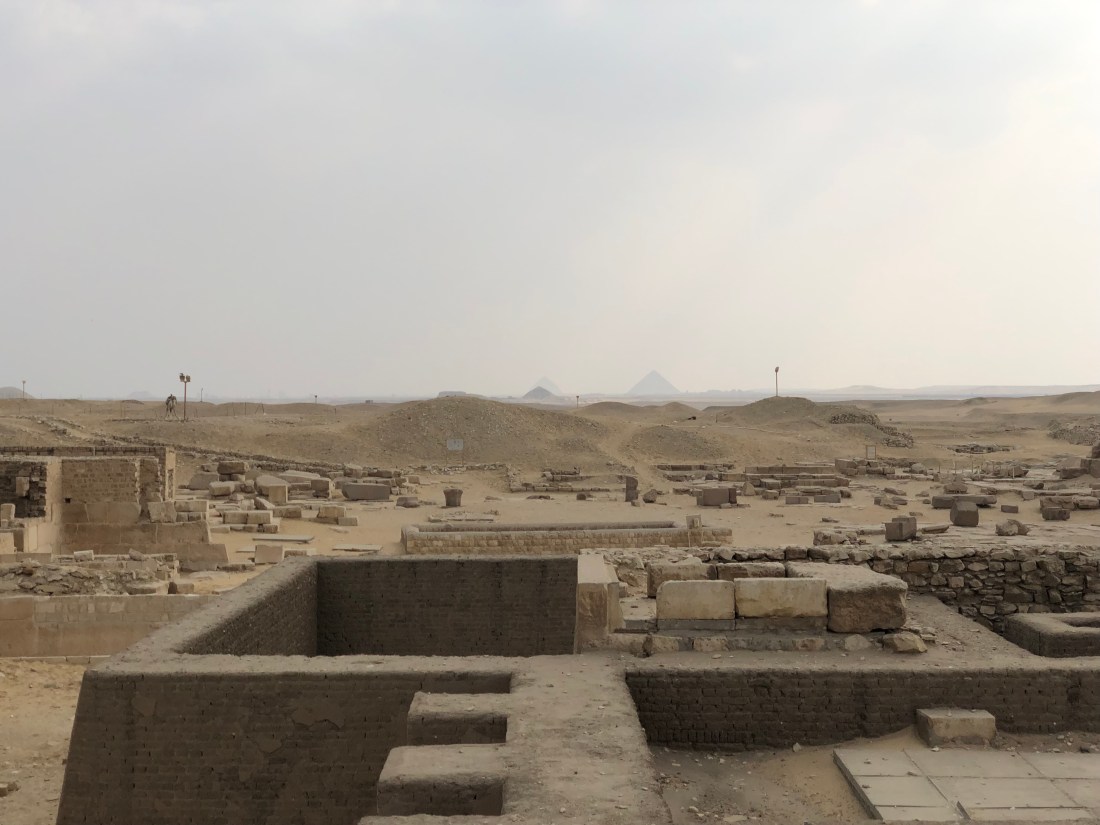
Next we stopped in one of the tombs at the base of the pyramids. This was the tomb of a woman who we in the upper tier of the social hierarchy. The highlight was the hieroglyphics. They were so details and even had color remaining from when they were first created.
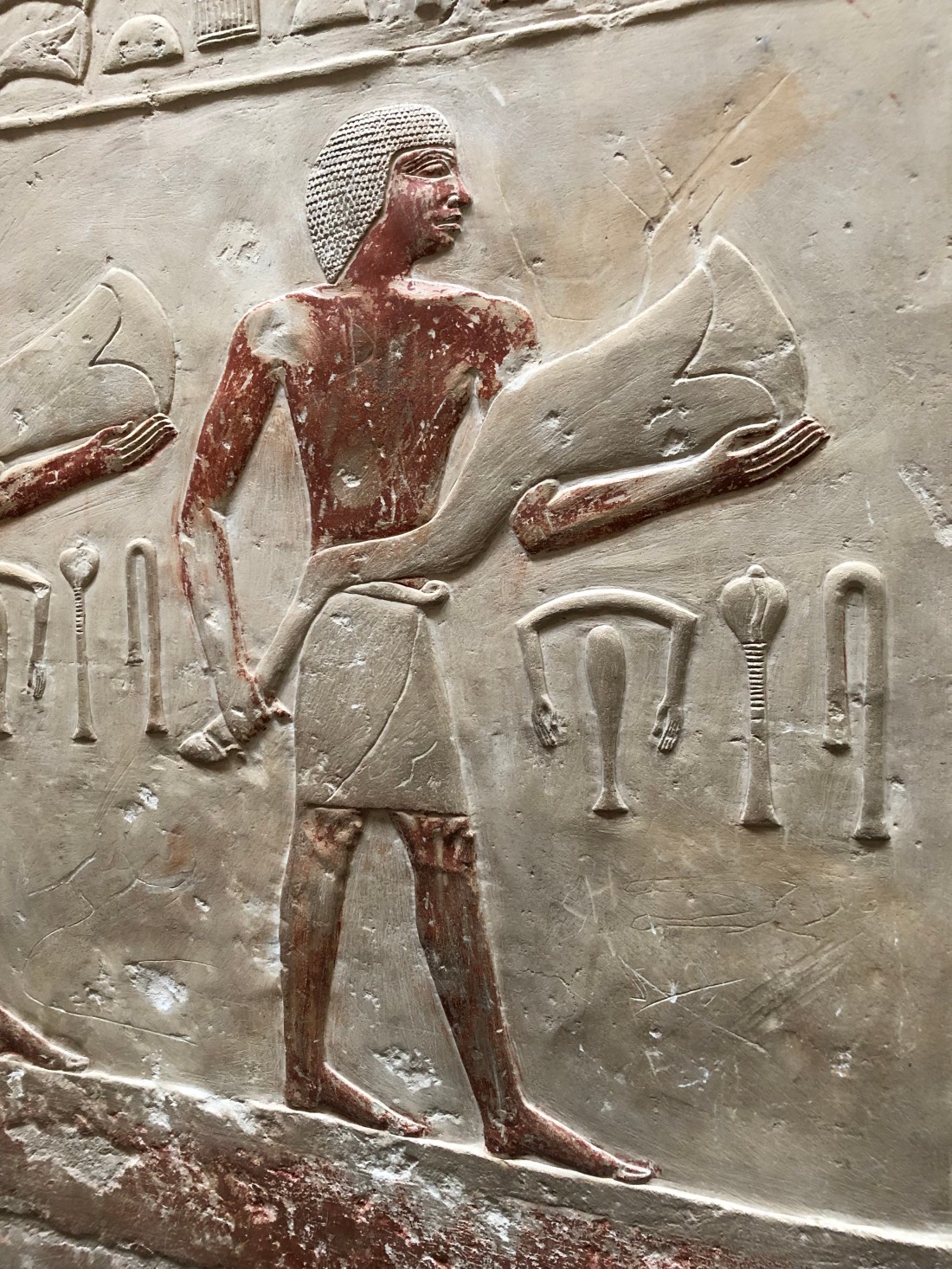
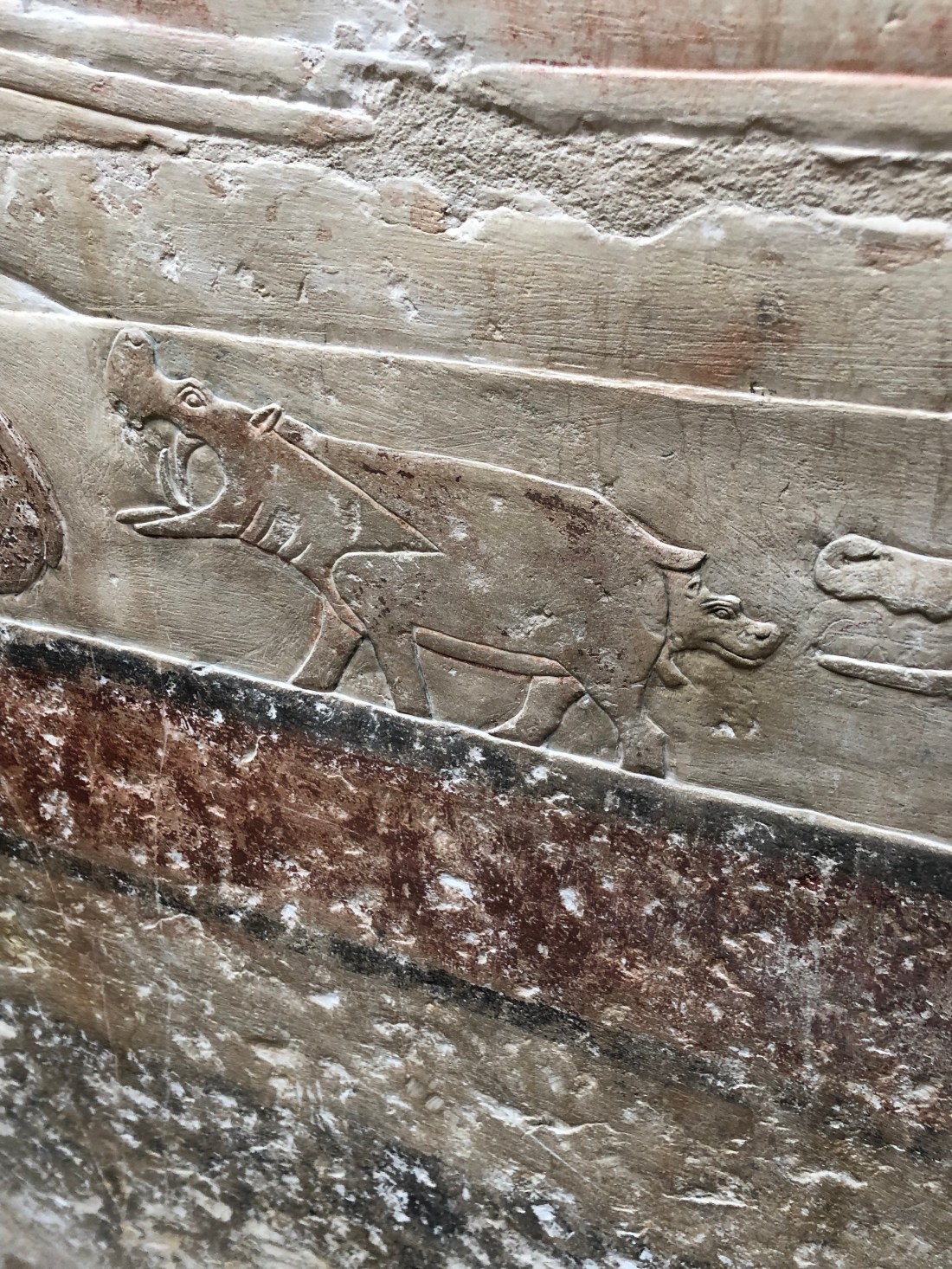
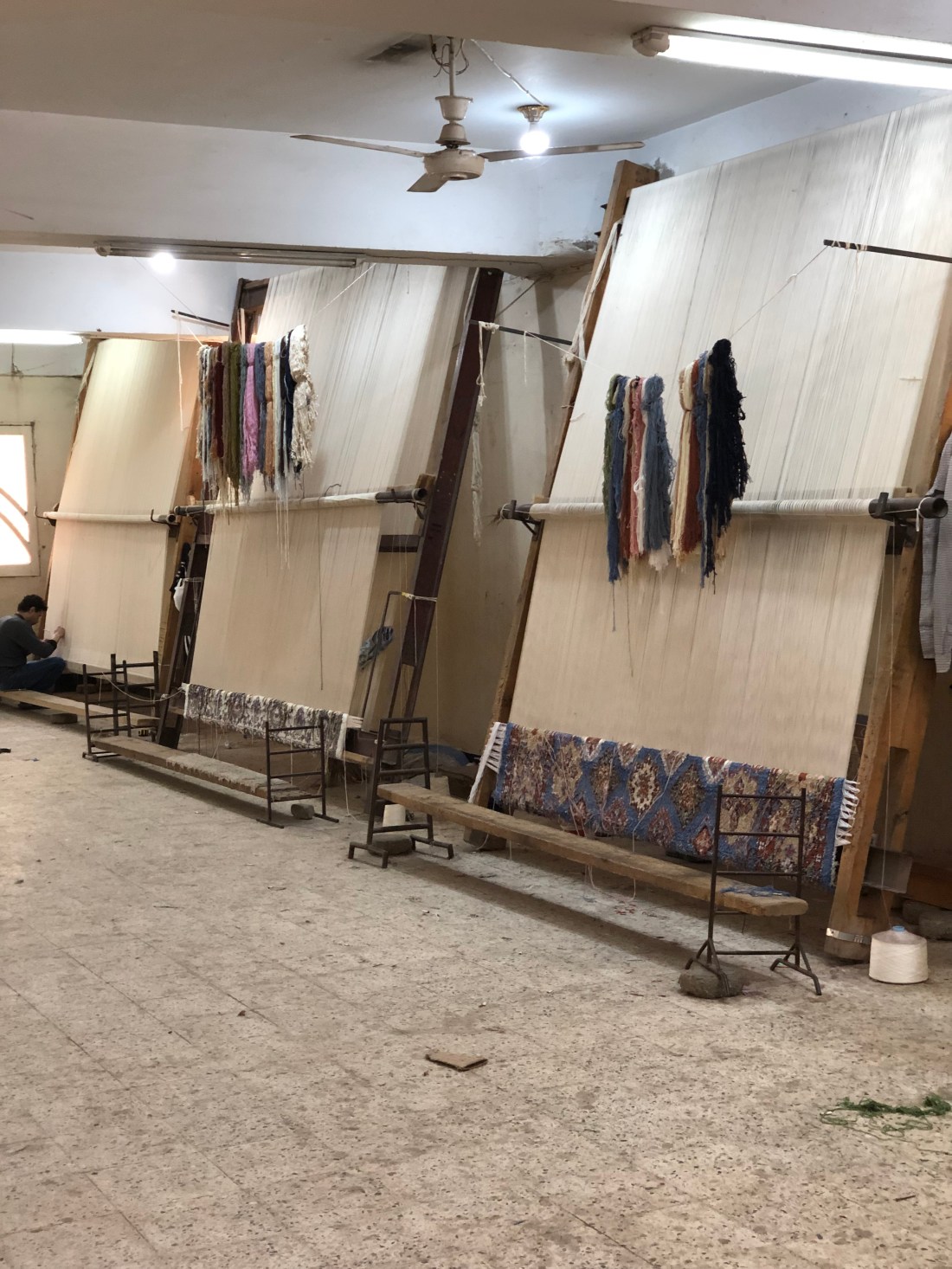
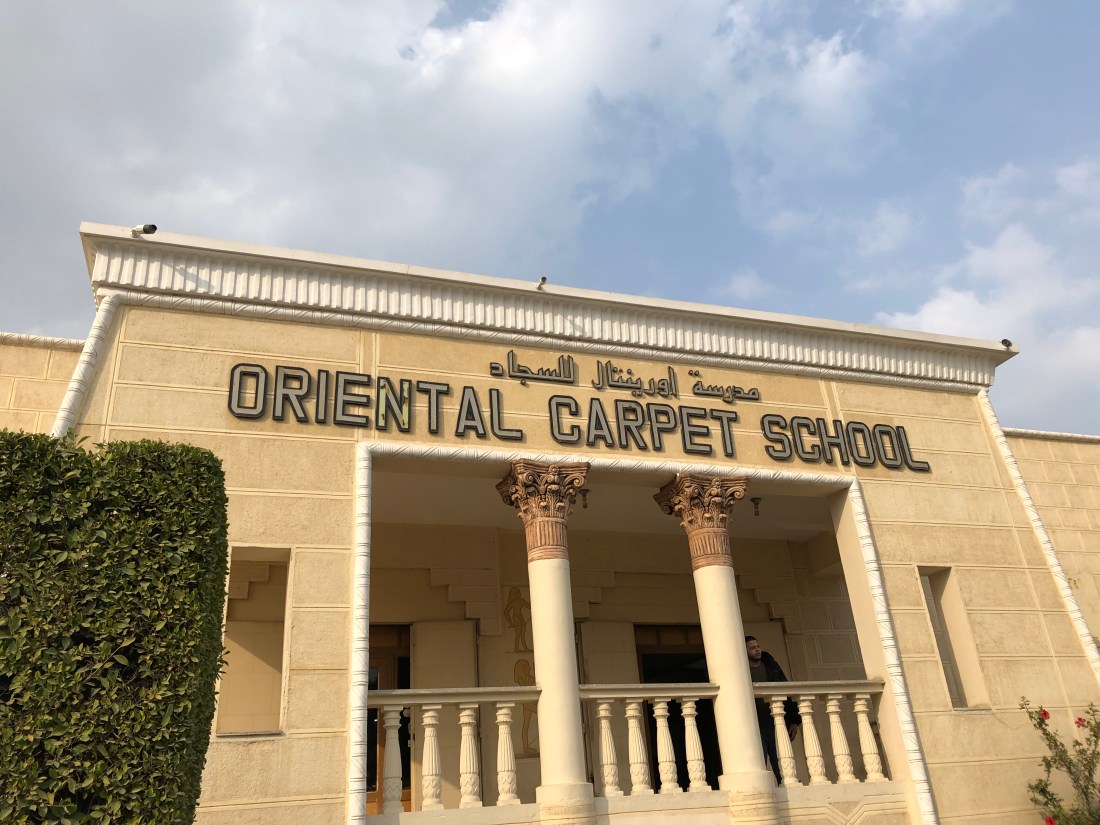
Leaving the grounds of the step pyramid we stopped at one of the carpet schools in the city. When our guide was describing the “schools” it felt a little like she was defending child labor. She told us they liked having the children work because with smaller hands they can make smaller knots and more intricate details. Parents will send their kids here to earn money to afford a good education. I heard her arguments but still felt a little uneasy about 10 year olds sitting making carpets all day. When we arrived the room was filled with giant looms each with 1-3 kids/teens working away. The process was very interesting to watch. When they tied the knot they would then take a razor blade sort of object and cut the knot. They did it so fast it was incredible! They also showed us how they would cut the excess string from the top with scissors which revealed the true pattern. Once the short tour was over they took us into the sales room which I could tell was another sales pitch. While I don’t consider myself a rug person, these were beautiful, particularly the silk rugs which would change colors depending on the angle you held the rug. I didn’t feel the need to drop a couple grand on a rug though so it was a pass.
Post rug shopping it was time to do it for the gram. We went to a stable with camels and horses for our desert sunset ride. Obviously we chose to ride the camels as a millennial in the deserts of Egypt by the pyramids does. The camels were very feisty, they kept making sounds that sounded straight out of Star Wars. After a few fits by the camels we were off and trekking over sand dunes to the perfect pyramids/sunset vantage point.
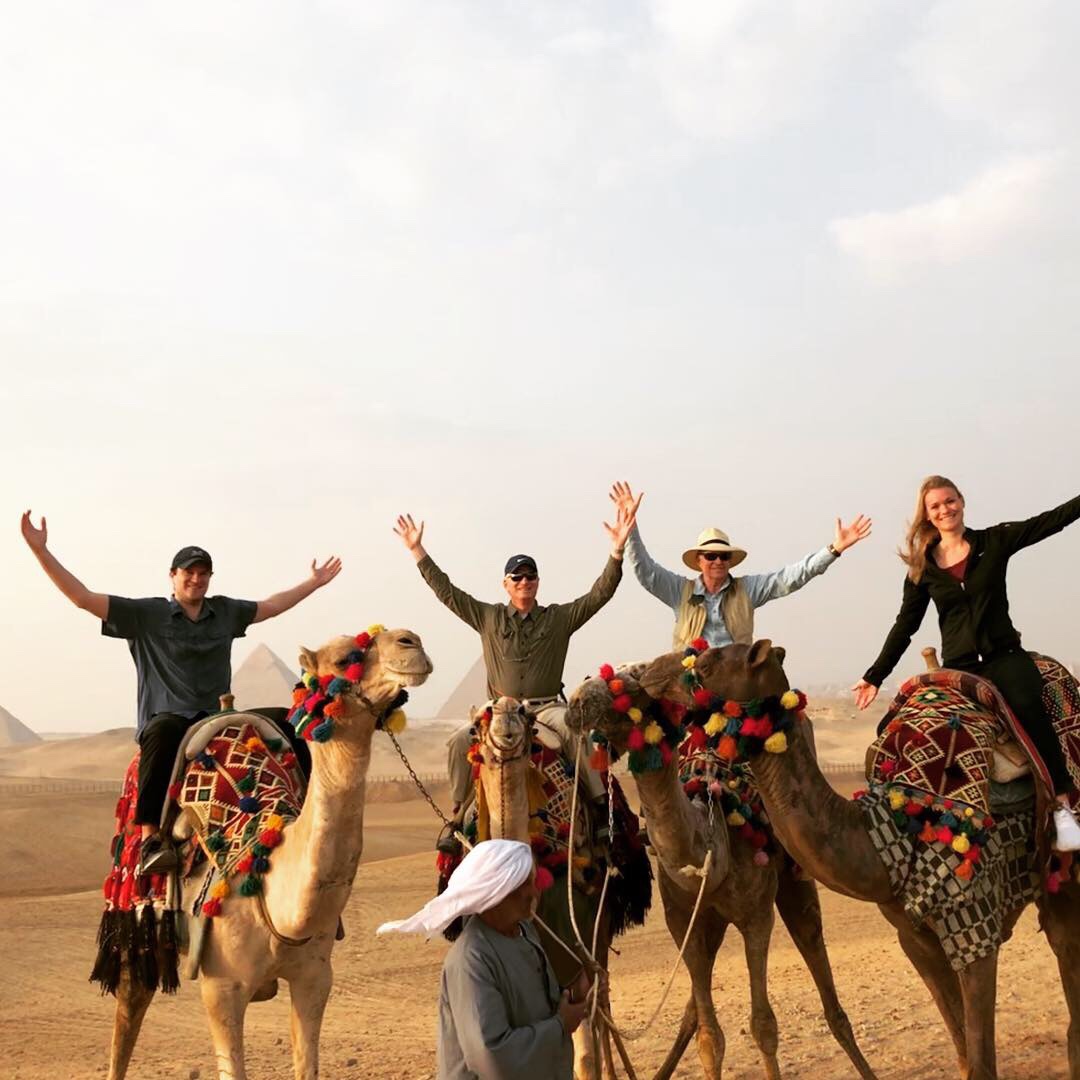
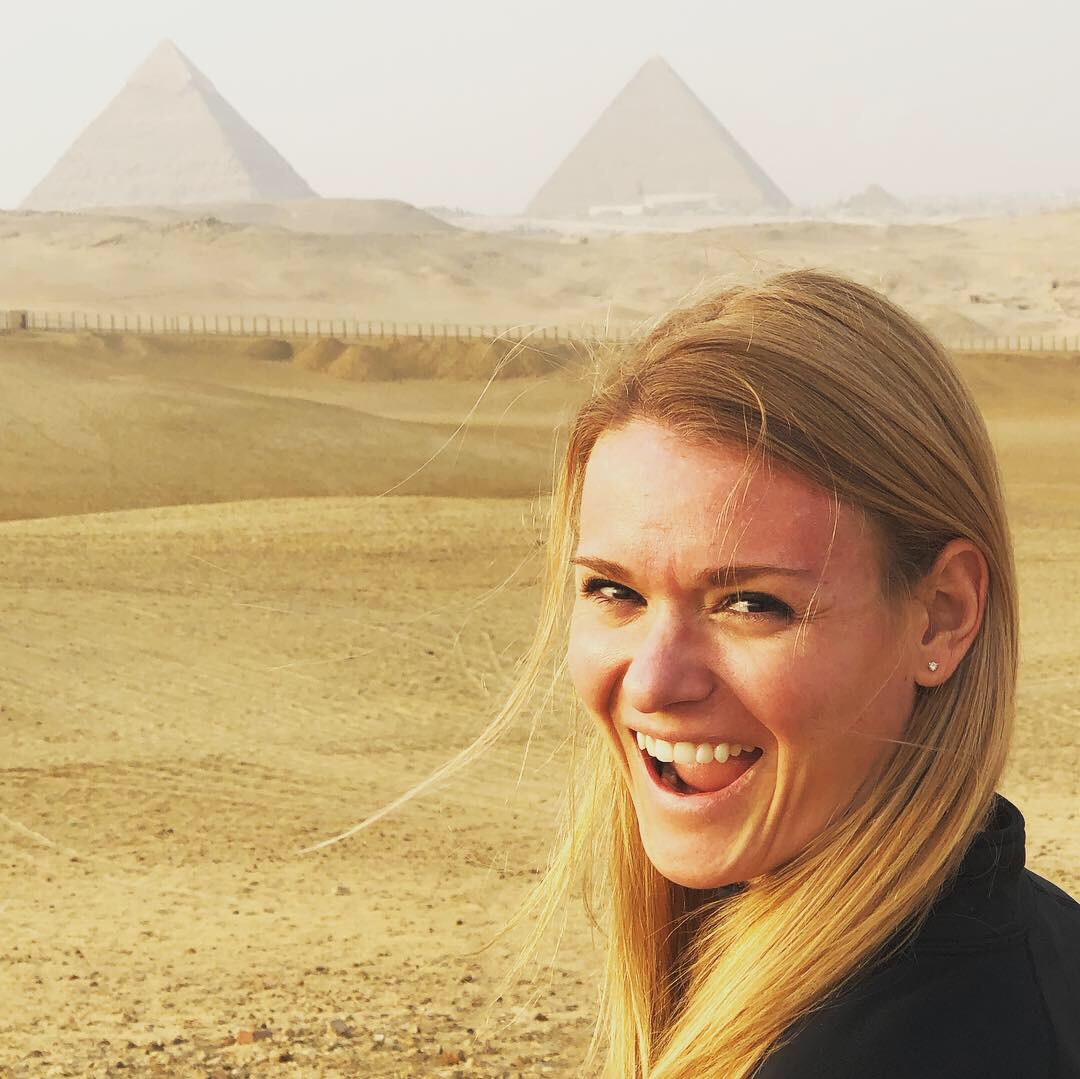
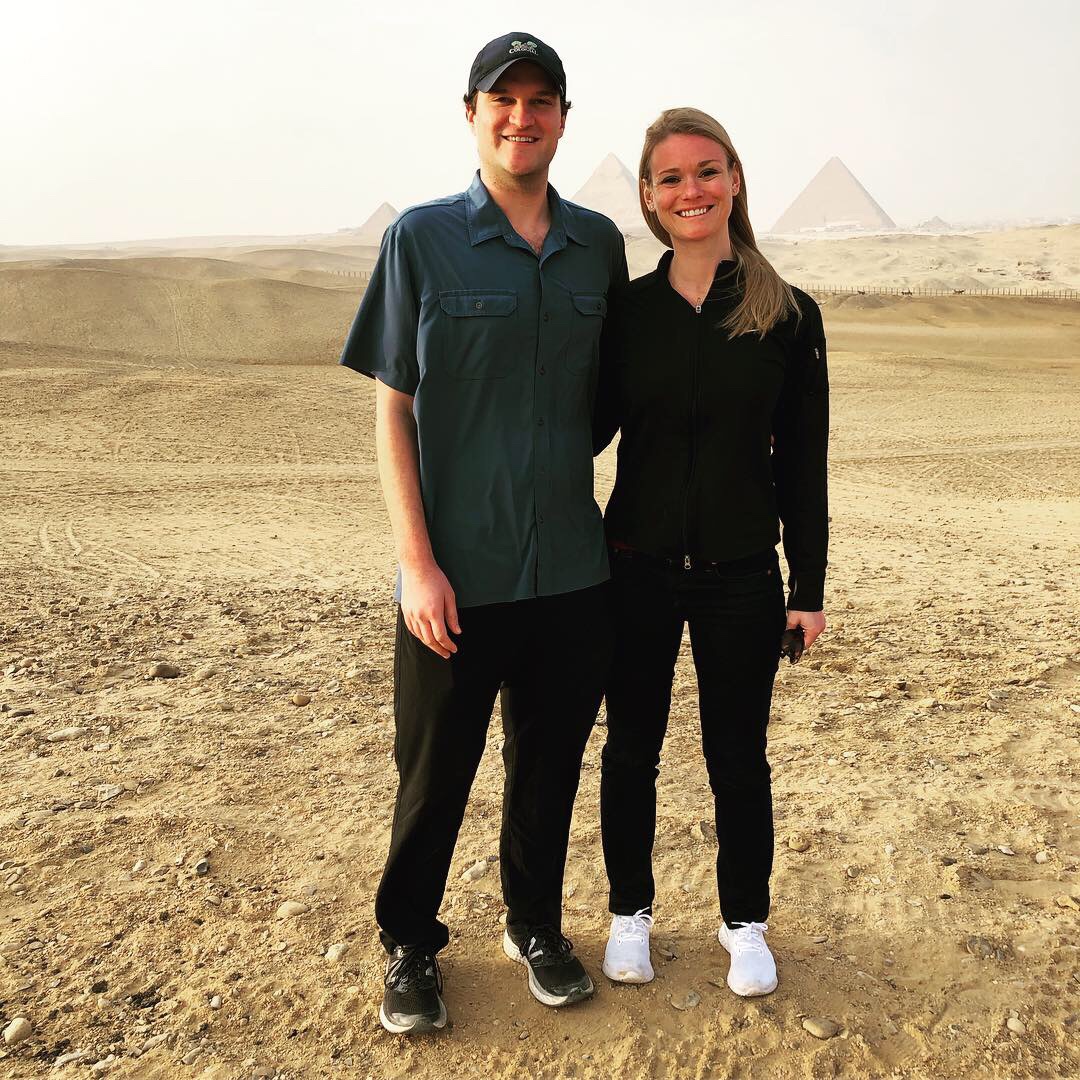
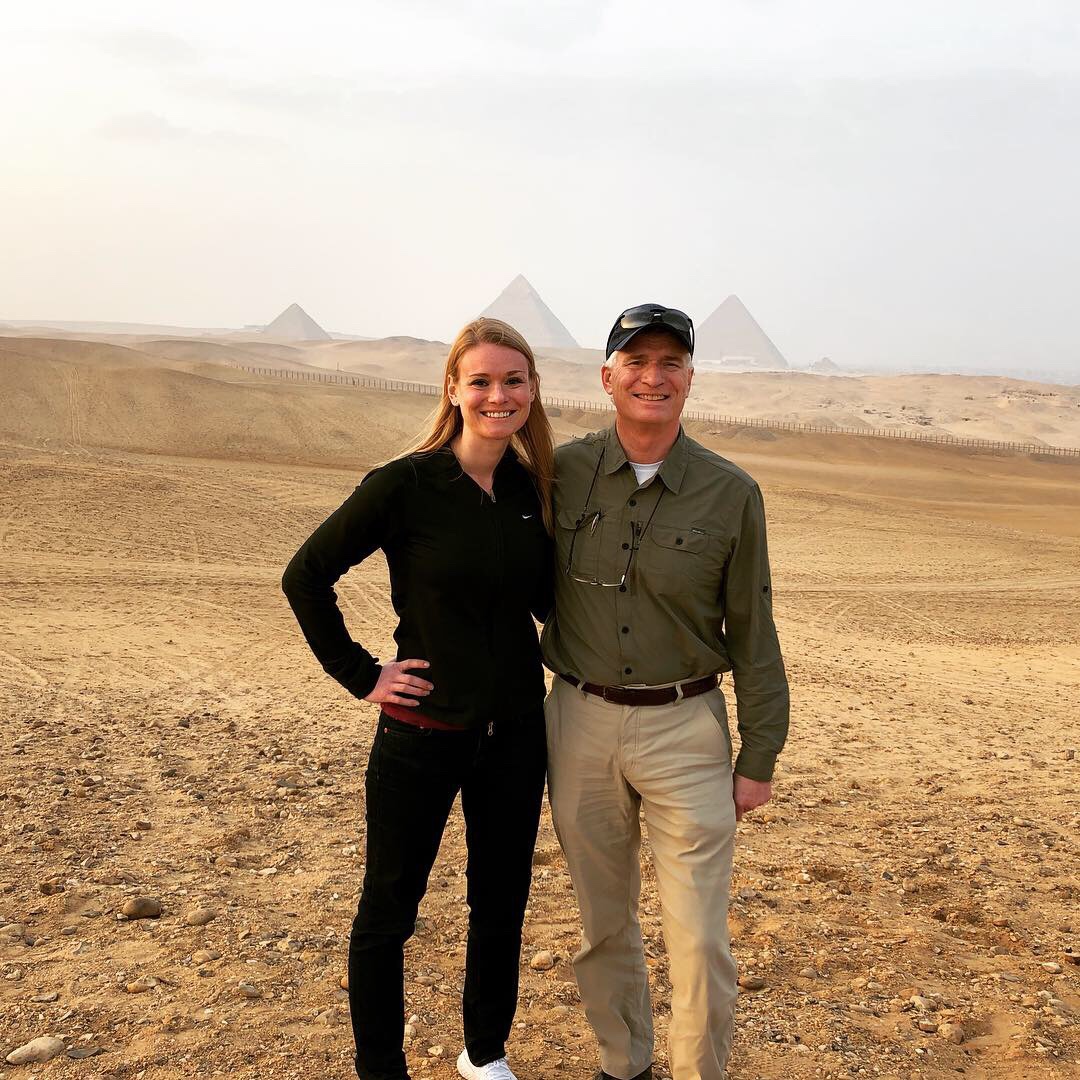
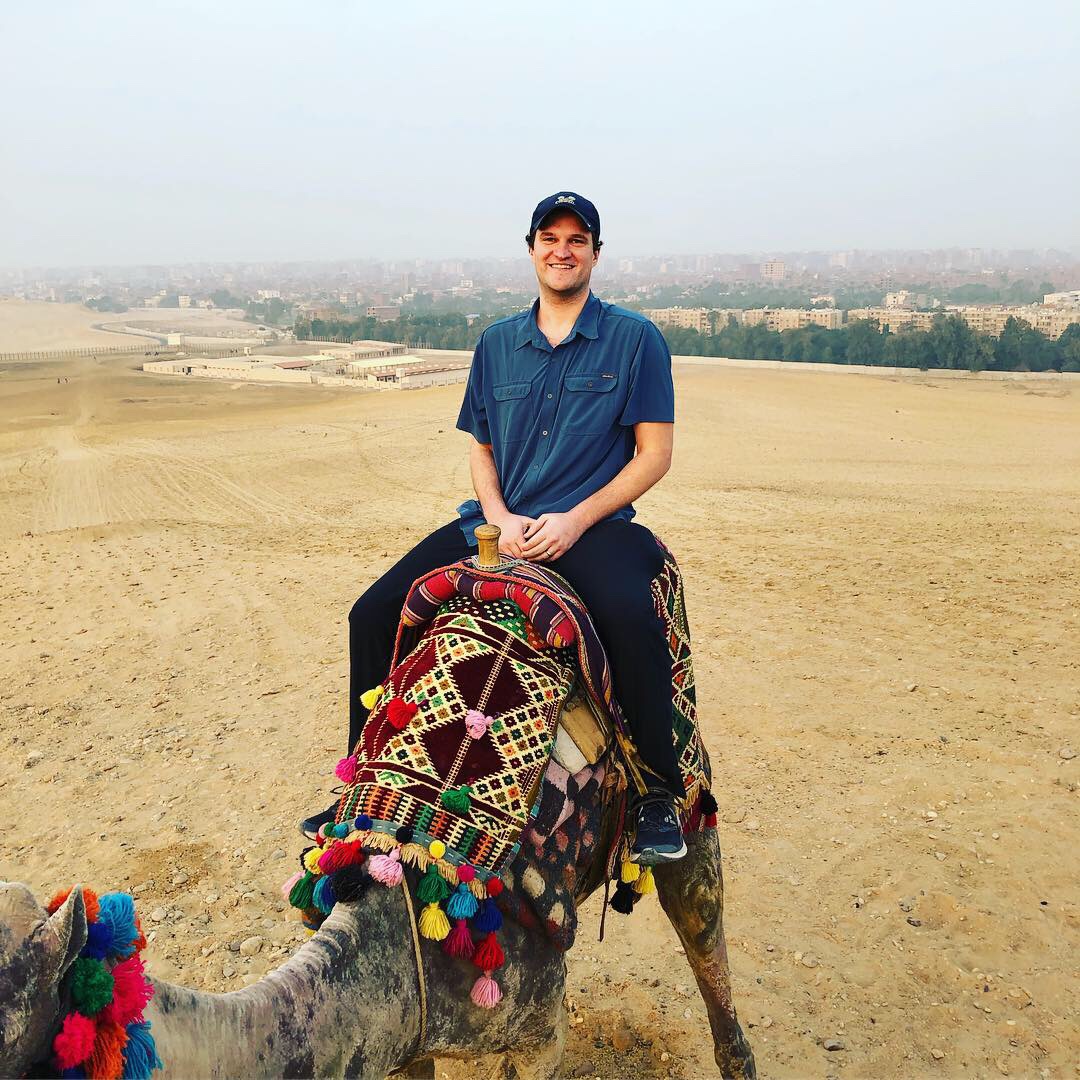
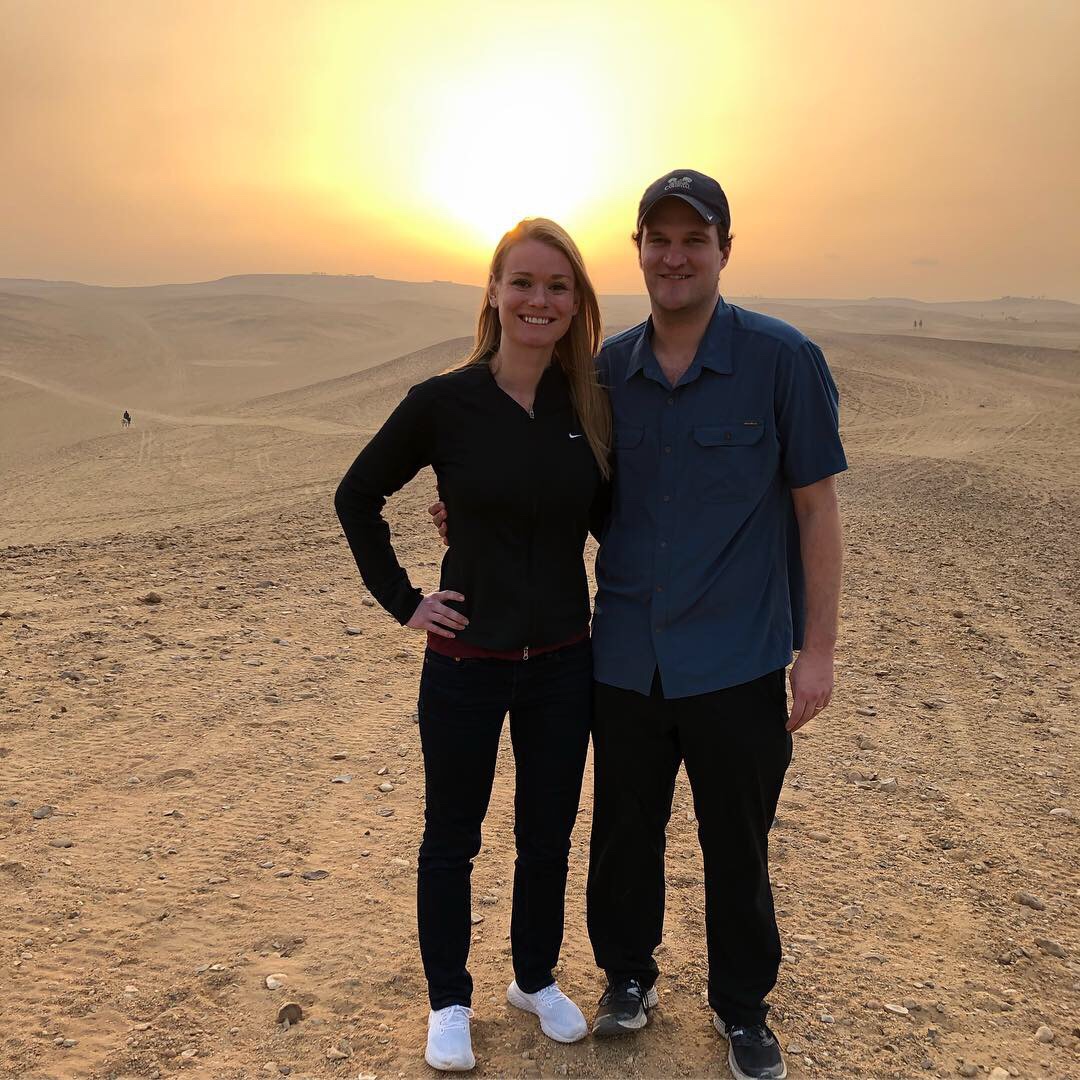
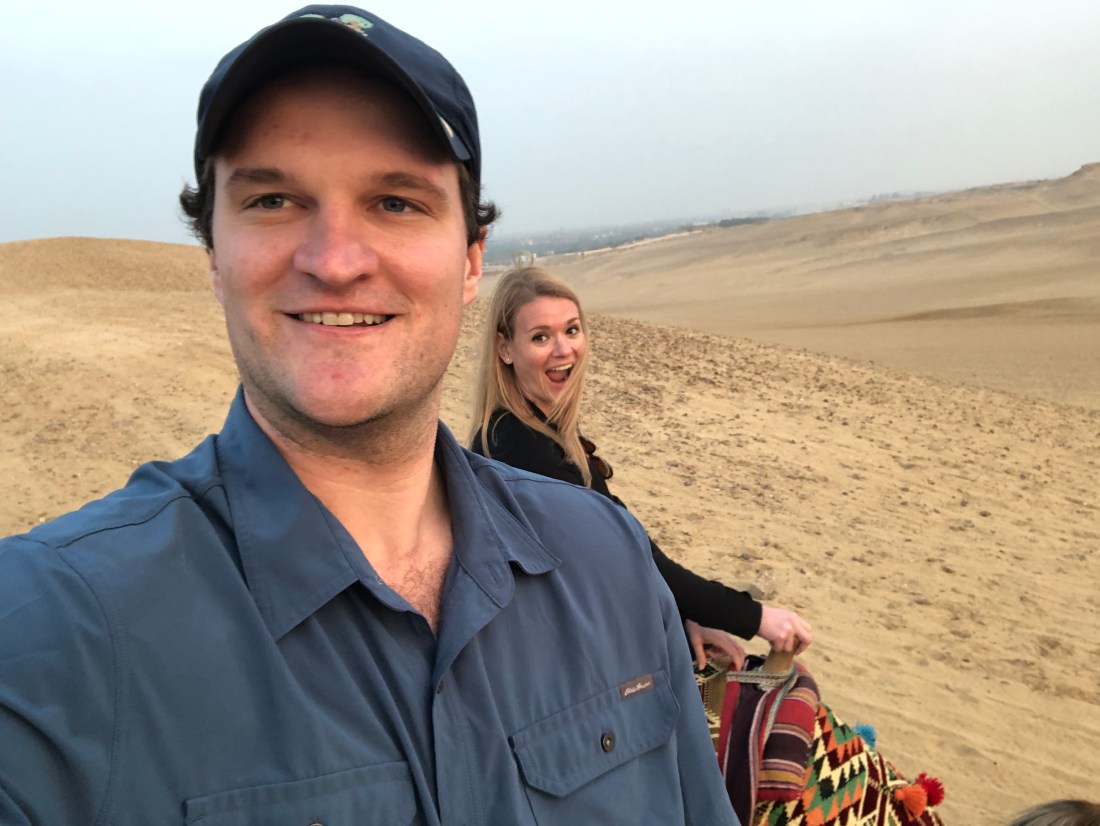
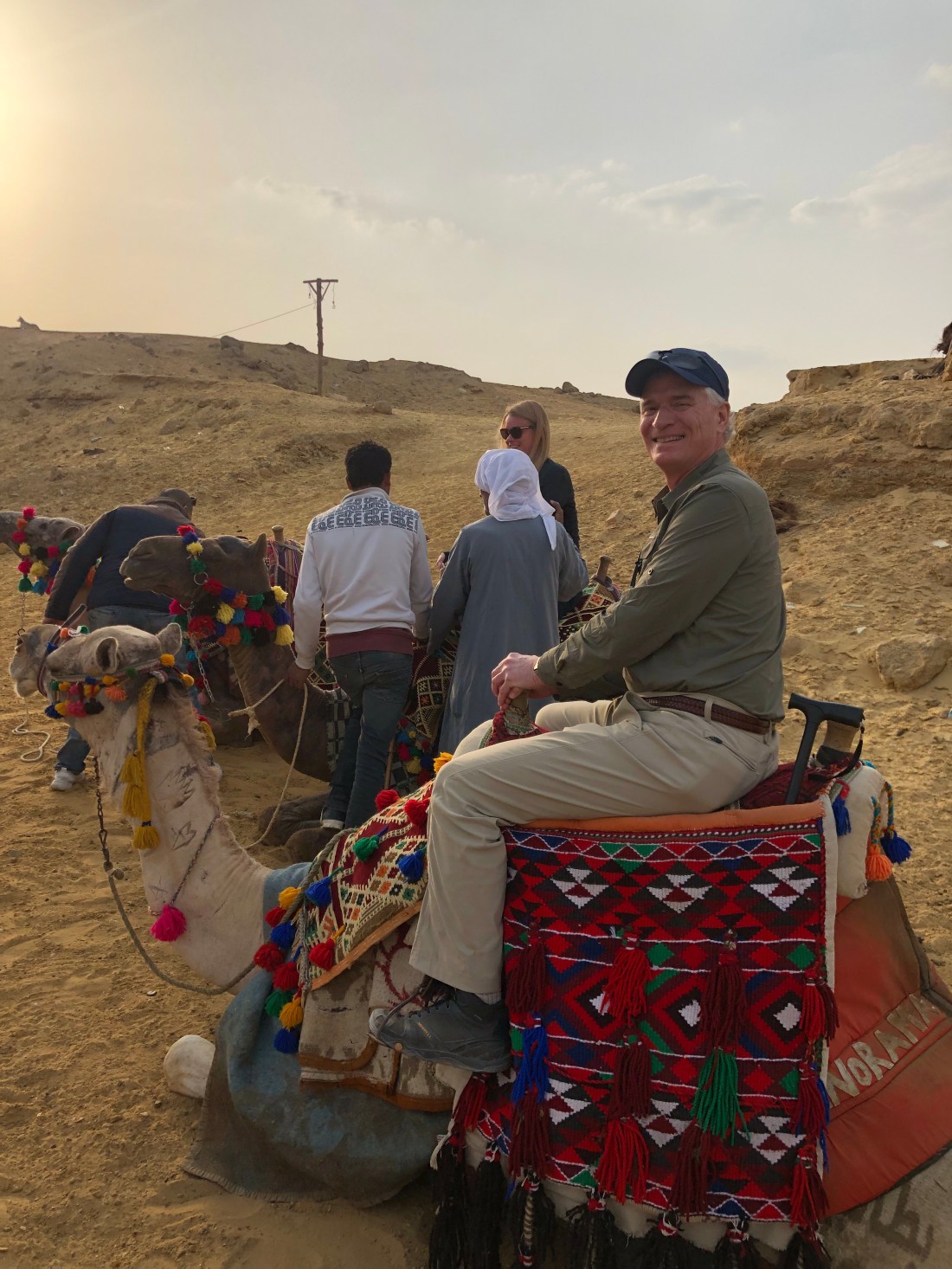
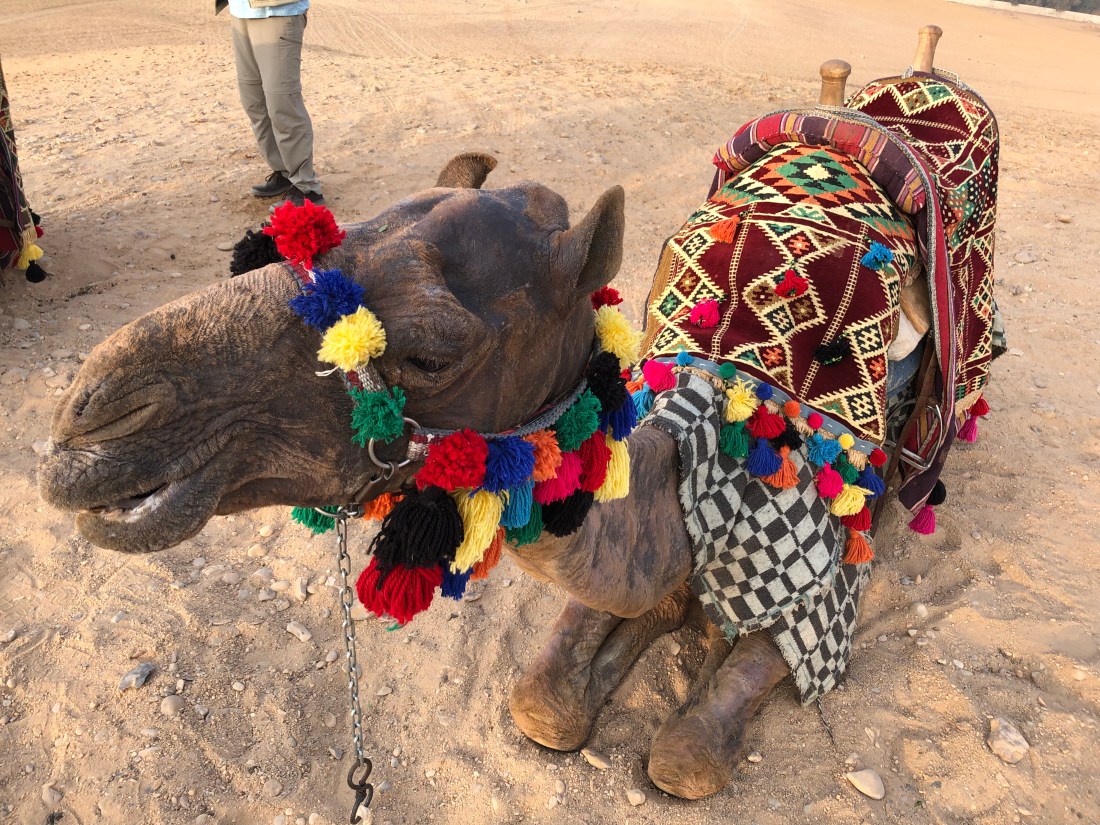
After what felt like a full photo shoot it was time for dinner which was mediocre so won’t bore you with details. We then went back to the hotel and enjoyed wine and good conversation.
So that was it! A whirlwind 36 hour experience. Now, onto the next!!
 Have Passport Will Travel
In ur next life u can be a travel writer. As always excellent. Really enjoyed
LikeLike